Introduction
Natural stone floors like granite and marble are prized for their beauty and longevity, but they're also commonly misunderstood. Many homeowners worry that a single wrong product — an acidic cleaner or an abrasive pad — could etch or dull the surface for good. The truth is more nuanced: granite and marble are different in composition and vulnerability, and the right cleaning approach depends on sealing condition, pH control, dilution, and safe mechanical technique. This long-form guide explains the science of stone porosity and sealing, why acidic cleaners can damage polished surfaces, how to choose safe pH ranges and dilutions, the pros and cons of microfiber vs traditional mops, and when to prioritise shine versus deep cleanliness. Practical step-by-step recipes and maintenance schedules are included so you can confidently clean stone floors without causing damage.
Why granite and marble behave differently
At a glance granite and marble may look similar — both are natural stone — but their mineralogy changes everything. Marble is metamorphosed limestone, mostly composed of calcium carbonate. Granite is an igneous rock, made largely of silicate minerals like quartz and feldspar. Calcium carbonate reacts with acids; silicates do not react in the same way. That's why marble is much more sensitive to acidic cleaners (it etches), while granite is comparatively acid-resistant but can still be damaged by abrasives and harsh chemicals that strip sealers or leave residues.
Porosity and sealing: the science that protects stone
Natural stone is porous to varying degrees. Porosity is a measure of the tiny voids in the stone where liquids and dissolved salts can penetrate. Porosity affects staining risk, how often a floor needs sealing, and which cleaners work best. Sealers are not permanent; they form a barrier (either penetrating or surface-forming) that reduces liquid penetration and makes cleaning easier.
Two common categories of sealers:
- Penetrating impregnators: These soak into the stone and chemically bond or polymerize in pores. They preserve the natural look and are good for most floors.
- Topical film-forming sealers: These leave a thin layer on the surface that can enhance shine but may alter slip resistance and require stripping and reapplication periodically.
Acidic cleaner damage risks
Because marble contains calcium carbonate, acids (vinegar, lemon juice, many bathroom cleaners) react and remove a microscopic layer of the surface, creating dull spots known marks. Even mild acids used repeatedly can gradually degrade a polished marble finish. Granite's silicate minerals are less reactive, but acidic cleaners can still harm protective sealers or react with certain accessory minerals in the stone causing localized discoloration.
pH levels and safe cleaner selection
For daily and periodic maintenance, pick cleaners formulated for natural stone or those labelled neutral pH (typically 7 +/- 1). Avoid products with pH below 6 (acidic) for marble, and be cautious around pH extremes (highly alkaline cleansers) because strong bases can also affect some treatments and finishes. For stubborn mineral scale, use targeted short-contact acid treatments only on granite where safe and follow with thorough rinsing; for marble, prefer mechanical removal combined with a poultice or consult a stone care professional.
Proper dilution & exposure times
Concentration and contact time are. A neutral stone cleaner concentrated to manufacturer's instructions is typically safe for daily use. Never exceed recommended dilutions and always rinse if the product label instructs. If using a mild acid (e.g., citric acid) spot treatment on granite, dilute and use for limited dwell times, then rinse. For marble, avoid acid spot treatments altogether unless performed by a professional stone restorer.
Tools: Microfiber cloths vs traditional mops
Choosing the right tool reduces physical abrasion and improves cleaning effectiveness.
- Microfiber cloths and flat mops: These trap particles and absorb residues without scratching. They’re excellent for dust mopping and light wet mopping. Microfiber's electrostatic effect lifts fine dust and grit that cause micro-scratches when dragged across the surface.
- Traditional string mops: Can be used when wrung out properly, but they may redeposit dirt and water if not changed frequently. Old or soil-laden mop heads can grind grit into the stone.
- Spin mops / steam mops: Steam mops should generally be avoided; heat and moisture can affect grout and some sealers. Spin mops with clean water and proper wringing are acceptable for heavier soiling.
Shine vs cleanliness: understanding trade-offs
High-gloss finishes look impressive but can hide micro-scratches and etched areas. Maintaining a showroom shine often requires topical products (polishes or coatings) that may alter slip resistance and need regular maintenance. If your priority is long-term stone health, favour a penetrating sealer and periodic professional polishing rather than frequent use of surface coatings. If you need both, schedule professional polishing on a cycle (e.g., every few years) and use neutral cleaners with microfiber in between to maintain appearance without aggressive treatments.
Step-by-step safe cleaning routine (daily → weekly → monthly)
Daily (light maintenance, 3–5 minutes)
- Dust mop with a microfiber pad to remove grit and dirt. Avoid sweeping with a stiff broom — that can kick up abrasive particles.
- Spot-clean spills immediately with a damp microfiber cloth and blot; do not rub. For oily spills, use a neutral degreasing stone cleaner per label.
Weekly (deeper clean, 10–20 minutes)
- Prepare neutral pH stone cleaner according to manufacturer dilution. Use warm water for better dissolving of light soils, not hot water which can affect some sealers.
- Mop with a flat microfiber mop — change water frequently. Use a two-bucket system if available: one clean water, one rinse bucket.
- Rinse with clean water to remove any cleaner residue and dry with a clean microfiber cloth or allow to air-dry.
Monthly (maintenance & inspection)
- Inspect grout lines and stone for any dull spots, staining or etching.
- If light residue remains, use a mildly alkaline stone cleaner per label and rinse thoroughly; then buff dry with microfiber.
- Address stains or dull areas with targeted treatments: poultices for oil/stain extraction, or professional honing for etched marble.
Removing specific problems without damage
Light etches on marble
Etches are caused by acid dissolving calcium carbonate. Small etches can sometimes be removed with polishing powder designed for marble; follow manufacturer instructions or get a professional stone restorer if you’re unsure. Avoid DIY acidic etch removers unless you have experience.
Stains (organic, oil, rust)
- Organic stains (coffee, wine): Apply a poultice (e.g., baking soda paste or commercial poultice) to draw the stain out; keep poultice moist and covered per product guidance.
- Oil stains: Use a solvent-based poultice if required, followed by a gentle neutral cleaner.
- Rust stains: Rust requires chelation; some rust removers can be used on granite but run a small test patch first. For marble, professional help is recommended.
Burn marks or deep scratches
Deep damage usually needs professional honing or replacement of affected tiles/slabs. Do not attempt aggressive sanding or grinding — you can quickly remove too much material and create unevenness.
Sealing: when, how, and what to use
Sealing is not a one-time job. The frequency depends on porosity, traffic, and product type. As a rule of thumb:
- Low-porosity granite: re-seal every 2–5 years.
- High-porosity marble or travertine: re-seal annually or when water no longer beads on the surface.
How to test sealing: place a few drops of water on the stone and see if it beads up or darkens the stone. If it absorbs, the sealer’s effectiveness is diminished and a reapplication is needed.
Applying a penetrating sealer — DIY steps
- Clean the floor thoroughly with a neutral cleaner and allow it to dry completely (24–48 hours if needed).
- Apply sealer per manufacturer instructions using a low-lint cloth or mop; avoid puddling.
- Wipe off excess sealer after the recommended dwell time and buff to a uniform appearance.
- Allow cure time before light foot traffic (refer to product label).
When to call a professional for sealing
Large areas, antique or very valuable stone, heavily trafficked commercial floors, or when switching between sealer chemistries should be handled by pros. Professionals can perform testing, use industrial-grade impregnators, and apply the product evenly at scale.
Microfiber technique: why it matters
Microfiber has a split-fiber structure that creates more surface area and microscopic hooks to capture dust and grit. For stone floors, use high-quality microfiber pads and launder them separately to avoid contamination. Replace pads periodically — a worn microfiber pad loses efficiency and can become abrasive.
Cleaning vs polishing vs restoring
Cleaning removes dirt and residues; polishing restores surface reflectivity by removing fine imperfections; restoring (honing) removes significant surface damage and requires progressive abrasives. Understand which outcome you need before choosing a product or technique. Regular neutral cleaning prevents the need for restoration.
Practical product recommendations (general guidance)
- Use neutral pH stone cleaners from reputable brands.
- Avoid DIY acidic recipes (e.g., vinegar + water) on marble. They may be fine for granite but always test first.
- Choose a penetrating sealer for floors unless you want a topcoat for extra sheen and are prepared for maintenance.
Maintenance checklist for busy households
- Daily: microfiber dust mop.
- Weekly: neutral pH wet mop and rinse.
- Monthly: inspect for stains, spot-treat, and address grout.
- Annually: water bead test and reseal if required.
Common mistakes and how to avoid them
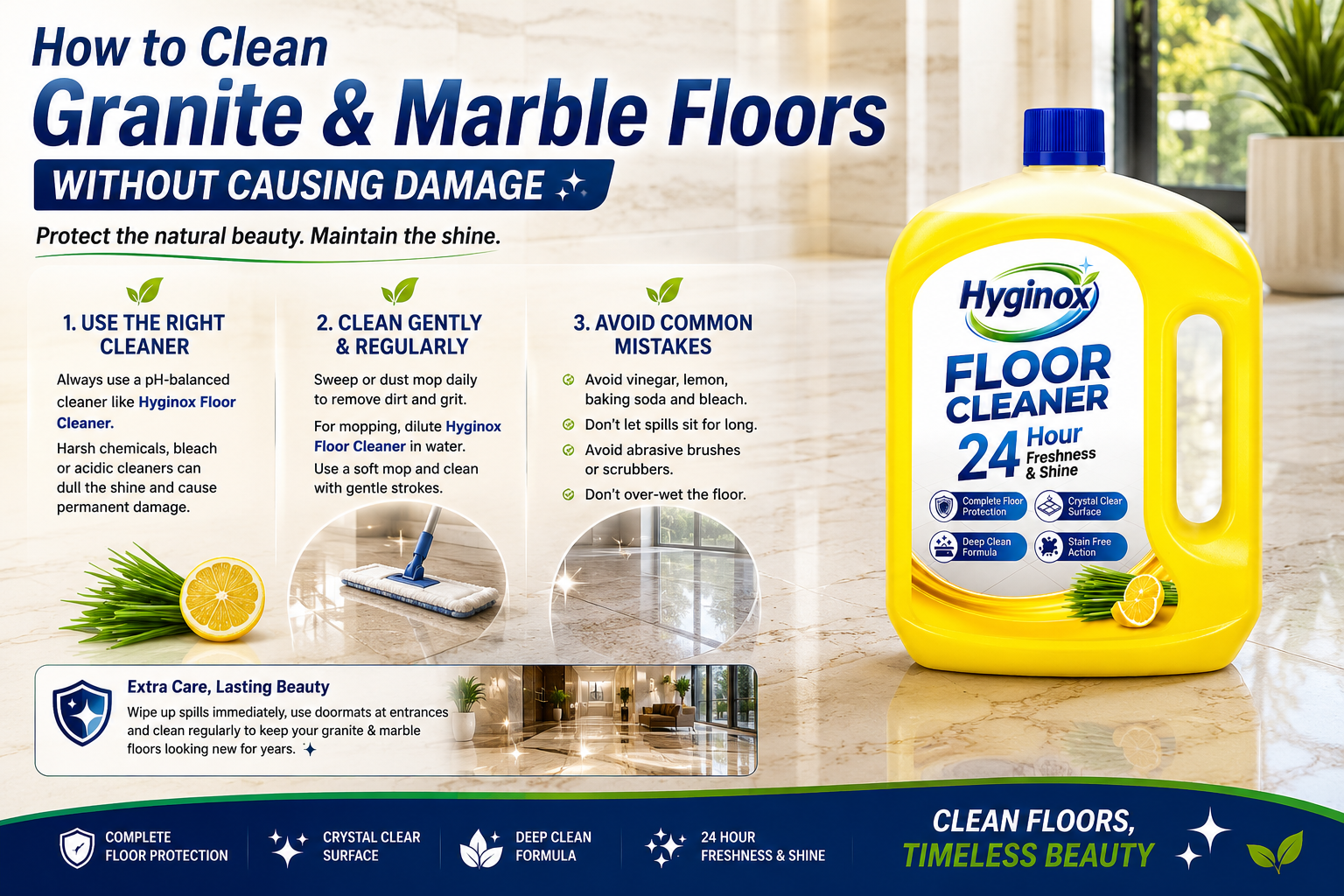
- Using vinegar or lemon on marble (causes etching).
- Employing abrasive cleaners or pads that grind the finish.
- Allowing spills to sit — blot immediately.
- Using steam cleaners that can affect grout and sealer bonds.
Troubleshooting quick guide
If the floor looks dull after cleaning — check for residue from cleaners (use a wet rinse), inspect sealer condition, and consider professional polishing if etched. If sticky or filmy, ensure proper dilution and rinsing; change mop water frequently.
FAQ
Q: Can I use dish soap on stone floors?
A: Occasional mild dish soap diluted heavily can be used on granite, but avoid on marble and don’t rely on it for regular care; it can leave residue if not rinsed properly.
Q: How much does professional polishing cost?
A: Costs vary by region, stone type, and area. Expect a per-square-meter/per-square-foot rate — get quotes and ask about abrasion steps and finish levels.
Q: Will sealing change the look of my stone?
A: Penetrating sealers generally preserve the natural look; some topicals may enhance colour and add sheen. Test on a hidden area first.
Conclusion
Cleaning granite and marble floors safely is mostly about choosing the right chemistry, controlling contact time, and using non-abrasive tools. For marble, avoid acids; for granite, prefer neutral cleaners and always test new products. Regular microfiber maintenance, periodic professional attention, and sensible sealing will keep natural stone floors looking exceptional for decades.
SEO notes
Primary keyword: granite marble floor cleaning safe — include this phrase in the main heading, introduction, and conclusion, and use long-tail variations across subheadings (e.g., "safe marble floor cleaning", "how to clean granite floors safely").