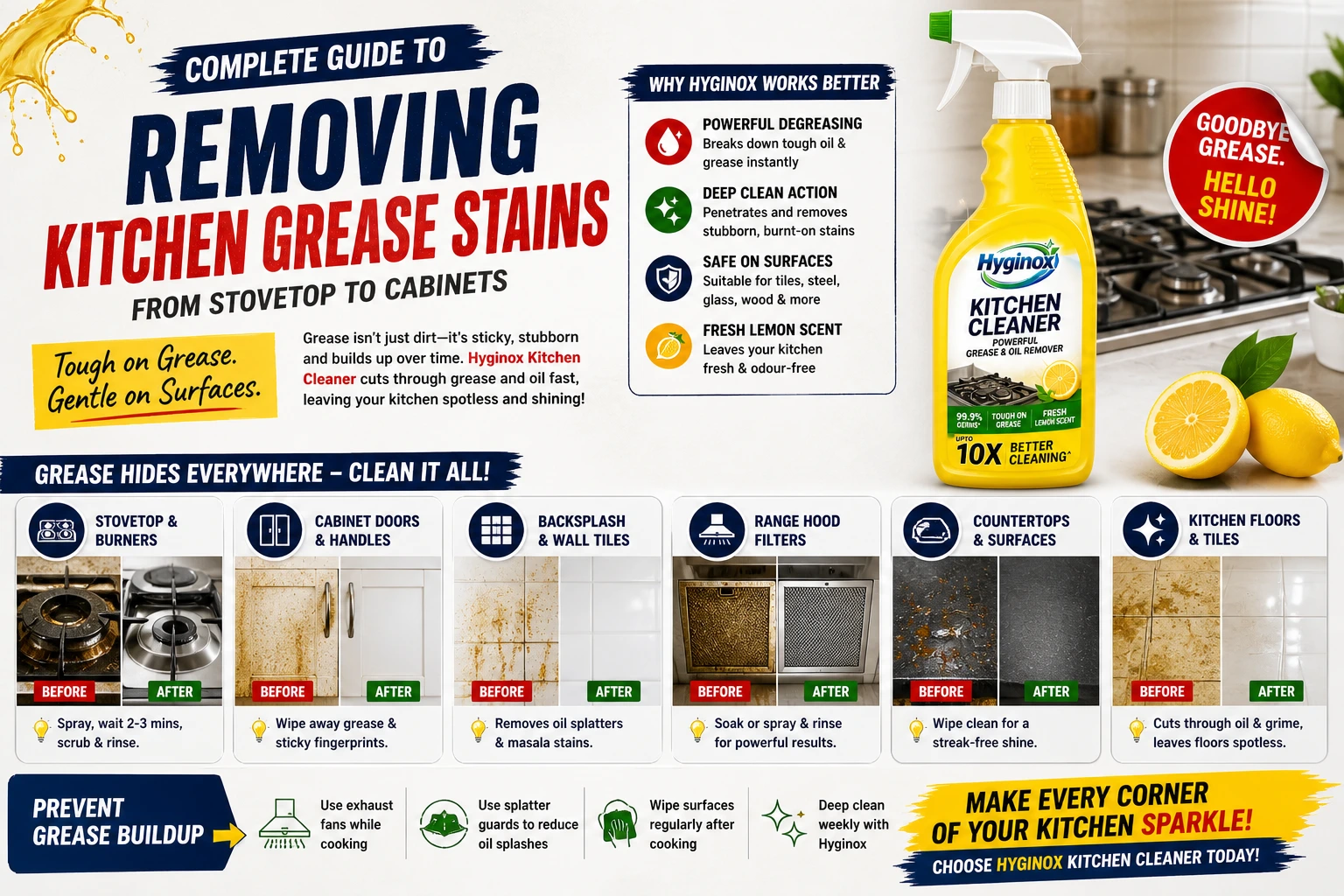
Kitchen grease stains are one of the most persistent cleaning problems in Indian homes. Oil-heavy cooking leaves a thin film on cabinets, tiles, burners, and counters that slowly turns into sticky buildup. If you only wipe the surface, the film comes back quickly because grease and dust bond together over time.
The right approach is to match the cleaner to the surface and the type of mess. Vinegar helps with some residue, but it does not fully break down burnt grease on its own. For stubborn buildup, you need a degreasing formula that cuts through oil and lifts the film instead of just moving it around.
Why kitchen grease stains build up and stick
When oil heats during frying or tempering, tiny droplets travel through the air and settle on nearby surfaces. These droplets mix with dust, steam, and food particles to form a sticky film that darkens over time. Heat can bake grease into surfaces, making stove edges, backsplash tiles, and filters look worse than they did initially.
Why vinegar can't remove heavy grease
Vinegar can loosen light grime, but it is not a powerful degreaser. It may improve appearance on fresh splatters but struggles with thick oil, burnt residue, and grease in corners—hence the tacky feel after a quick wipe.
Cleaning methods for kitchen surfaces
1. Stovetops, Grates, and Burners
Start by removing loose crumbs and wiping off excess oil. Apply a degreasing cleaner to the stovetop and allow short dwell time so the residue softens. For removable grates and burner parts, soak separately if possible, then scrub with a non-abrasive sponge. Avoid harsh scraping that can damage coatings or leave visible marks.
2. Drip Pans and Burnt Grease Spots
Drip pans often collect the heaviest buildup because oil and heat combine there repeatedly. A kitchen cleaner with strong grease-cutting action works better than a general detergent. Spray, wait a few minutes, and wipe in stages rather than scrubbing immediately. This helps lift the burnt layer without excessive force.
3. Cabinet Doors and Handles
Cabinet fronts near the cooking area pick up a fine sticky haze that is easy to miss. Use a cloth dampened with a kitchen degreaser and wipe from top to bottom. Pay attention to handles and finger-touch areas, where oil often accumulates fastest. Dry the surface afterward so new dust does not cling to leftover moisture.
4. Backsplash and Wall Tiles
Backsplash tiles catch both oil splatter and steam residue. A cleaner that is safe on tiles is useful here because it can remove grease without leaving streaks. For grout lines, let the product sit a little longer before wiping, since grease settles into the seams more easily than on glazed tile surfaces.
5. Range Hood Filters
Range hood filters are one of the most overlooked grease traps in the kitchen. When they clog, suction drops and grease spreads more widely around the cooking zone. Remove the filters regularly and soak them in hot water with a strong degreasing cleaner. Rinse thoroughly and dry completely before reinstalling.
6. Countertops and Kitchen Floors
Countertops need a surface-safe formula that removes oil without leaving a film. Kitchen floors often collect a mixture of grease, flour, and foot traffic dirt, so they need cleaning after heavy cooking sessions. A dedicated floor cleaner works well for the final wipe-down once the greasy splashes around the stove are handled.
Natural vs commercial cleaners for kitchen grease
Natural methods work for light, fresh messes and spot cleaning. For grease that accumulates over many cooking sessions, commercial degreasers are formulated to break down oil and sticky residue faster and more completely.
- Natural methods suit mild residue and daily upkeep.
- Commercial kitchen cleaners tackle burnt grease, filters, and heavy splatter.
- Floor cleaners finish the job after surface degreasing is done.
Step-by-step: remove kitchen grease
- Clear loose crumbs and excess oil from the surface.
- Apply a kitchen degreaser to the affected area.
- Let it sit briefly so the grease loosens.
- Wipe or scrub with a soft cloth or sponge.
- Repeat on heavy buildup instead of forcing it all at once.
- Finish by wiping dry to prevent fresh dust from sticking.
Prevention Strategies That Work
Prevention matters because grease becomes harder to remove once it hardens. A few small habits can keep your kitchen much easier to maintain.
- Use exhaust fans while cooking to reduce airborne oil.
- Keep splatter guards near the stovetop.
- Wipe cabinets and backsplash areas regularly.
- Clean grease spots soon after cooking instead of leaving them overnight.
- Deep-clean filters and floors on a weekly schedule.
Why Hyginox Kitchen Cleaner Fits This Job
If you want a practical product for this kind of cleanup, Hyginox Kitchen Cleaner is built for grease-heavy kitchen surfaces. It works degreasing powerhouse for stovetops, cabinets, backsplash tiles, and other spots where oil tends to cling.
For final floor cleanup after the greasy mess is removed, you can pair it with Hyginox Floor Cleaner to keep the kitchen spotless without residue.
Active Oxygen in Hyginox: Hyginox Kitchen Cleaner incorporates Active Oxygen technology that oxidizes and loosens grease molecules, helping to lift burnt oil and sticky residues so they rinse away more easily. When used it reduces the need for aggressive scrubbing and pairs well with Hyginox Floor Cleaner for a thorough finish.
Final Takeaway
Kitchen grease stains are easier to handle when you stop treating every surface the same way. Burnt grease, oily cabinets, range hood filters, and floor splashes all need slightly different attention. With the right degreaser, steady routine cleaning, and better cooking habits, the kitchen stays cleaner with much less effort.
Troubleshooting burnt-on grease
For burnt-on grease that has darkened and adhered to surfaces, patience wins. Apply a concentrated degreaser and allow longer dwell time (15–30 minutes). Use a soak-and-scrub approach for removable parts like grates and drip trays: soak in hot water with degreaser, then scrub gently with a non-abrasive pad. Avoid metal scouring pads on coated surfaces—repeat soaking rather than aggressive scraping.
Quick weekly kitchen maintenance routine
Keep grease from getting out of hand with a short weekly routine that takes 10–20 minutes:
- Wipe stove surrounds and backsplash with a degreaser after heavy cooking days.
- Soak range hood filters for 20–30 minutes and rinse thoroughly.
- Wipe cabinet handles and tops where smoke accumulates.
- Mop floors with a floor cleaner to remove tracked grease.
Safety tips when using degreasers
Always follow label instructions. Wear gloves and ensure good ventilation, especially when using concentrated products. Do not mix degreasers with bleach or acid-based cleaners. For painted or lacquered surfaces, test the cleaner on a small hidden area to confirm compatibility.
When to consider professional cleaning
If grease has penetrated vents, ducts, or reached electrical components in the range hood, professional cleaning prevents fire risk and restores proper airflow. Also hire professionals if stains persist despite multiple safe cleaning attempts.
Frequently Asked Questions
How soon should I clean grease splatter?
Wiping fresh splatter within a few hours prevents it from hardening; a short daily wipe near the stove stops buildup that becomes tough to remove later.
Can I use the same cleaner on cabinets and tiles?
Use surface-safe degreasers for cabinets (test on a hidden area for finishes) and stronger tile-safe degreasers for backsplash and grout—avoid abrasive tools on finished cabinet surfaces.
How often should range hood filters be cleaned?
For regular frying-heavy households, clean filters every 2–4 weeks. Less frequent cooking can be managed monthly.
Will kitchen degreasers harm painted cabinets?
Strong degreasers can strip delicate paint or lacquer finishes. Use diluted cleaner or a mild, non-abrasive formula and always test first.
What is the safest way to remove burnt-on grease from drip pans?
Soak removable drip pans in hot water with a degreaser, then gently scrub with a non-abrasive pad. Repeat soaking for stubborn spots rather than aggressive scraping.