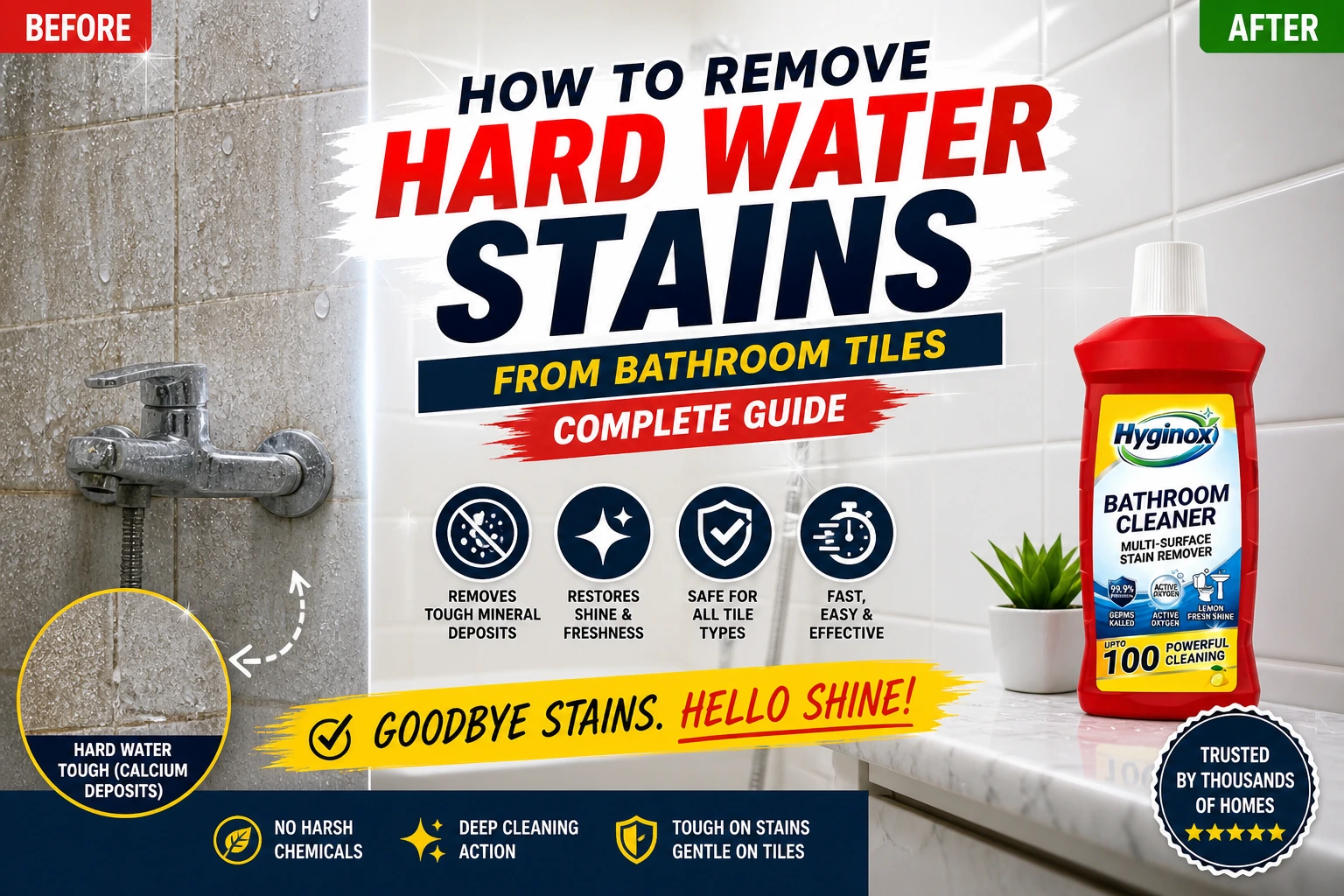
Hard water stains on bathroom tiles are one of the most common cleaning problems in Indian homes. The white chalky marks around shower walls, corners, and taps are not just dirt - they are mineral deposits left behind when water evaporates.
If you have been scrubbing the same patch again and again with little result, the problem is usually not your effort. It is the cleaning method. Regular soap or all-purpose cleaners often remove surface grime but do very little against calcium and magnesium deposits.
What causes hard water stains on bathroom tiles?
Hard water contains dissolved minerals. When water splashes on tiles and dries, the minerals stay behind and form a white or cloudy layer. Over time, those deposits build up into stubborn stains that cling to grout, corners, and textured surfaces.
- Repeated splashing from showers and buckets
- Poor ventilation that slows drying
- Textured or anti-skid surfaces that trap residue
- Ignoring stains until they harden into mineral crust
Why regular cleaners don't remove hard water stains
Most everyday cleaners are formulated to cut oil, soap scum, and general dirt. Hard water stains are mineral-based, so a standard bathroom wash may improve surface appearance but won't dissolve calcium and magnesium deposits.
Scrubbing harder can damage some finishes. On glossy tiles, excessive scrubbing may leave fine scratches. On anti-skid tiles, residue can embed deeper into texture, making the stain appear worse despite effort.
Light fixes: vinegar and baking soda for tiles
For light stains on ceramic or vitrified bathroom tiles, natural solutions can help if used correctly. White vinegar is mildly acidic and can loosen fresh mineral deposits. Baking soda adds mild abrasion and helps lift residue from grout and corners.
How to use vinegar safely
- Mix equal parts white vinegar and water.
- Spray on the stained tile area.
- Let it sit for 5 to 10 minutes.
- Wipe with a soft sponge and rinse well.
How to use baking soda
- Make a paste with baking soda and a little water.
- Apply it to the stain or grout line.
- Let it rest for a few minutes.
- Gently scrub with a soft brush and rinse.
Important: Avoid vinegar on marble, limestone, travertine, or any acid-sensitive stone surface. If you are unsure about the tile material, test a small hidden spot first.
Natural vs commercial cleaners for hard water
DIY methods are helpful for light buildup but slow on older stains. Commercial bathroom cleaners are generally better for thick, widespread deposits because they contain descaling agents and surfactants that speed removal.
- Natural solutions suit fresh, light stains and small areas.
- Commercial cleaners handle repeated cleaning, larger coverage, and faster results.
- Professional-style formulas reduce effort and give a more even finish on larger surfaces.
Cleaning methods by tile type
1. Vitrified Tiles
Vitrified tiles are low-porosity and relatively easy to clean. A diluted bathroom cleaner usually works well here because the stains sit on the surface rather than sinking in deeply. Use a microfiber cloth or soft sponge for the best finish.
2. Ceramic Tiles
Ceramic tiles can handle routine bathroom cleaning well. If the stain is fresh, vinegar-based cleaning may help. For regular maintenance, a dedicated tile-safe bathroom cleaner gives better consistency and less streaking.
3. Anti-Skid Tiles
Anti-skid tiles are trickier because the textured surface holds mineral residue. Use a cleaner with enough dwell time, then work the surface with a soft-bristle brush. Focus on the grooves where deposits collect most.
Step-by-step: remove hard water stains from tiles
- Rinse the tile surface with clean water to remove loose dust.
- Apply your chosen solution - DIY mix or bathroom cleaner - to the stained area.
- Leave it for a few minutes so the minerals soften.
- Scrub gently with a soft sponge or brush, depending on tile texture.
- Rinse thoroughly so no cleaner or loosened residue remains.
- Dry the surface with a microfiber cloth or squeegee to prevent new marks.
Prevention Tips That Actually Work
The best way to deal with hard water stains is to stop them from forming in the first place. A few simple habits can make a big difference.
- Use a squeegee on shower walls after every bath.
- Wipe wet areas before they dry, especially around taps and corners.
- Improve bathroom ventilation to reduce drying time.
- Clean once or twice a week instead of waiting for buildup.
- Consider a water softener if your home has severe hard water problems.
When to Use Hyginox Bathroom Cleaner
If you want a practical cleaner for stubborn bathroom buildup, Hyginox Bathroom Cleaner is a stronger everyday choice than mixing random home remedies. It is designed for bathroom surfaces where soap scum, water marks, and mineral deposits need to be removed without turning cleaning into a long scrubbing job.
It is especially useful when you want a single product for ceramic tiles, vitrified tiles, shower areas, and fitting surfaces that collect stains quickly.
Active Oxygen — what it does: Hyginox formulations use Active Oxygen, a stabilized oxygen-releasing technology that helps oxidize and loosen organic residues and staining compounds. By breaking down grime at a molecular level, Active Oxygen makes soap scum, biofilm and lightly bound mineral residues easier to lift and rinse away, and it decomposes into water and oxygen with minimal residue when used. Learn more at Hyginox Bathroom Cleaner.
Deep-cleaning and troubleshooting for stubborn mineral crust
When stains have built up over months or years they often form a hard crust rather than a loose film. Treat these two-step job: soften or chemically dissolve the minerals first, then mechanically remove the softened crust without damaging the tile finish.
Step 1 — Soften deposits
For stubborn limescale, use a descaling solution containing citric acid, diluted phosphoric acid, or a purpose-made bathroom descaler. Apply the product according to label directions and allow sufficient dwell time — often 10–20 minutes — so the mineral bonds weaken.
Step 2 — Gentle mechanical removal
After the minerals have softened, gently remove them with a soft-bristle brush, microfibre pad, or non-scratch scraper. Work in small sections and rinse frequently to avoid spreading softened residue back over cleaned tile.
Tile-safe notes
Always match the chemistry to the tile: acids and descalers are fine for glazed ceramics and vitrified tiles but can etch natural stone. For marble, limestone or travertine, avoid acids entirely and use pH-neutral descalers or professional-grade stone cleaners. When in doubt, test a small hidden area first.
Specific fixes for common hard-water problems
White film around taps and faucets
Apply a 1:1 white vinegar solution and let it sit for 5–10 minutes, then rub with a soft cloth. For metal fittings, use a toothbrush to reach threads and crevices. Rinse and dry to prevent new deposits.
Rim of mineral crust in shower trays
Spray a descaler, allow longer dwell time (15–30 minutes if safe for the surface), then use a plastic scraper to lift the softened crust. Repeat and finish by sealing any exposed grout.
Streaking on textured anti-skid tiles
Textured tiles trap residue in grooves. Use a brush with angled bristles and a higher-dwell commercial descaler designed for textured surfaces. A steam cleaner can also help loosen deposits in grooves before brushing.
Tools, products and safety checklist
- Tools: microfibre cloths, soft-bristle brushes, narrow grout brush, plastic scraper, squeegee, spray bottle.
- Chemicals: vinegar (for safe surfaces), baking soda, citric-acid descaler, commercial tile descaler, pH-neutral stone cleaner for delicate stone.
- Personal safety: gloves, eye protection, and good ventilation. Avoid mixing chemicals, especially acids and bleach.
Maintaining tiles after deep cleaning
Once tiles are clean, preserving that finish requires consistent but light maintenance. Follow a simple schedule to keep mineral buildup at bay:
- Daily: Squeegee shower walls and wipe high-splash areas after use.
- Weekly: Light wipe with a mild bathroom cleaner and quick brush of grout lines.
- Monthly: Targeted descaling on known problem spots and check grout/sealant condition.
- Quarterly: Inspect grout and re-seal where needed to reduce moisture entry.
Preventive hardware and water solutions
If your home struggles with repeated heavy mineral deposits, consider a hardware solution. Point-of-use water softeners for showers or whole-home softeners reduce the minerals that cause limescale. Shower filters are a lower-cost option that can reduce visible spotting and prolong tile life.
DIY descaling recipes (use with care)
Home mixtures can help when deposits are light to moderate, but always avoid acids on sensitive stone.
- Vinegar spray: Equal parts white vinegar and water — safe on glazed tile but not on natural stone.
- Baking soda paste: Baking soda and water paste applied to grout lines then scrubbed gently.
- Citric soak: Dissolve citric acid powder in warm water for a mild descaling soak — effective and often safer than harsher mineral acids.
Troubleshooting: stain not coming off?
If multiple attempts fail, consider the following checklist before calling experts:
- Confirm tile material — natural stone requires different care.
- Try a higher-dwell commercial descaler that's safe for your surface.
- Use a steam cleaner to loosen stubborn deposits without chemicals.
- If deposits are deeply embedded in grout, regrouting or professional restoration may be necessary.
Monsoon care for tiles in humid regions
Heavy monsoon humidity increases water spotting and creates more frequent deposit cycles. During monsoon season adopt a tighter maintenance rhythm: squeegee daily, run exhaust and fans longer, and do a weekly light descaling of high-splash zones.
Maintenance checklist before guests arrive
- Squeegee shower walls and glass doors.
- Wipe taps and visible fittings to a shine.
- Check grout lines for fresh spotting and clean if needed.
- Rinse floor and dry to remove last traces of cleaner.
Final Takeaway
Hard water stains are common, but they are manageable once you match the method to the stain. Use vinegar or baking soda for light deposits, switch to a tile-safe commercial cleaner for heavier buildup, and protect the surfaces with simple daily habits.
For Indian bathrooms that see frequent water spotting, a reliable product like Hyginox Bathroom Cleaner gives a more practical and repeatable result than scrubbing the same stain over and over.
Frequently Asked Questions
Can I use vinegar on all tile types?
No — avoid vinegar on natural stone such, travertine, and limestone. For those surfaces use a pH-neutral tile cleaner or test a hidden area first.
How often should I deep-clean tiles to prevent hard water buildup?
Weekly light cleaning with a squeegee and a monthly targeted clean using a tile-safe cleaner helps prevent heavy mineral buildup in most Indian bathrooms.
Will hard water damage grout over time?
Mineral deposits can make grout look discolored and attract more dirt, but they don't usually weaken grout structurally. Regular cleaning and occasional sealing will prolong grout life.
Can I remove long-standing mineral crust without professional help?
Yes — commercial descaling bathroom cleaners often work well. For extremely thick crusts or delicate stone surfaces, consider professional restoration to avoid damage.
Is using a squeegee after every shower necessary?
It isn't mandatory, but using a squeegee dramatically reduces mineral residue and extends the time between deeper cleans.