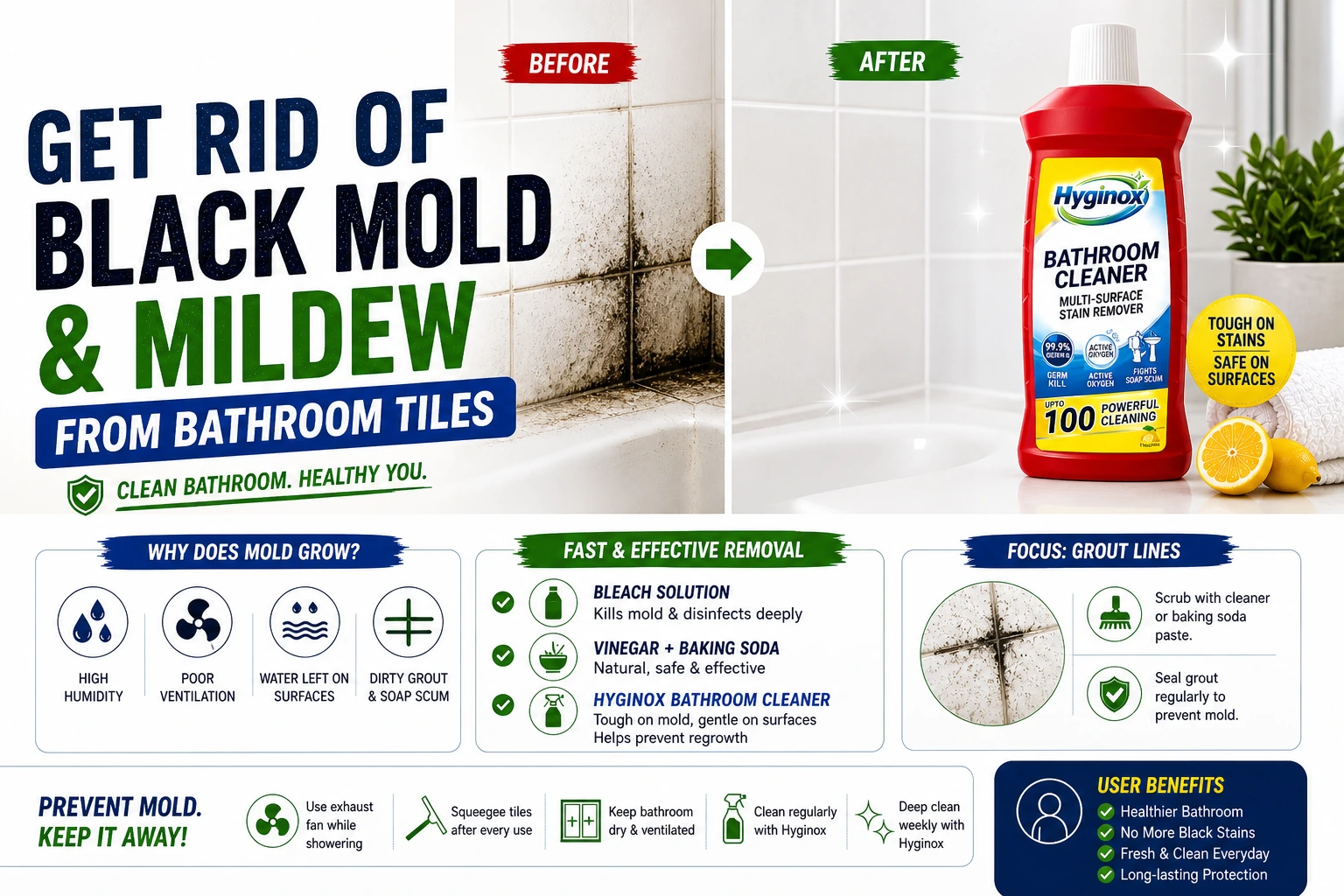
Black patches in shower corners and grout lines are a common problem in Indian bathrooms, especially during monsoon. If left untreated, mold and mildew spread quickly and create both hygiene and health concerns. This guide shows exactly how to clean and prevent regrowth.
Mold vs mildew: difference and why it matters for bathroom tiles
People often use the terms together, but there is a difference:
- Mildew is usually surface-level, powdery, and easier to remove in early stages.
- Mold is darker, deeper, and can penetrate grout and porous areas if ignored.
On bathroom tiles, both can appear stains, grey patches, or greenish spots. Grout lines are the most vulnerable because they trap moisture for longer periods.
Why bathrooms promote mold growth
Mold thrives in humid, low-airflow spaces. Bathrooms create ideal conditions when water remains on surfaces after every shower.
- High humidity and steam buildup
- Poor ventilation or weak exhaust flow
- Water left on tiles and corners
- Soap scum and dirt trapped in grout
Mold removal methods for bathroom tiles
1. Bleach Solution (For Tough Visible Growth)
Bleach can disinfect and remove severe staining on suitable bathroom surfaces. Apply carefully, let it sit briefly, scrub gently, then rinse thoroughly. Never mix bleach with acids or other cleaners.
2. Hydrogen Peroxide (Targeted Spot Treatment)
Hydrogen peroxide is useful for visible mold spots and grout areas. Spray directly, wait a few minutes, scrub, and rinse. It is often used when you want strong action without heavy fumes from bleach.
3. Commercial Bathroom Cleaner (Routine + Prevention)
A dedicated bathroom cleaner is often the most practical for regular use because it handles soap scum, mildew traces, and surface grime together. Consistent use reduces chances of regrowth compared to occasional deep scrubbing.
Natural method: vinegar + baking soda for mildew
For light mildew and early-stage buildup, a natural method can work:
- Spray white vinegar on affected tiles and grout.
- Leave for 10 minutes.
- Apply baking soda paste on stubborn spots.
- Scrub gently with a soft brush and rinse.
This method is better for mild cases. Heavy black mold in shower corners often needs stronger chemical treatment or professional assessment.
Grout line mold: how to clean and prevent
Grout absorbs moisture and keeps mold spores active. If grout cleaning is ignored, mold returns even when tiles look clean.
- Use a narrow brush to reach grout depth
- Allow cleaner dwell time before scrubbing
- Rinse and dry the lines completely
- Seal grout periodically to reduce moisture entry
Tools and safety you should use
Before attempting heavy mold removal, gather the right tools and take safety precautions. Proper preparation keeps you safe and improves results:
- Tools: soft and narrow-bristled grout brush, microfiber cloths, spray bottles, rubber gloves, eye protection, and a mask (N95 for dusty or moldy conditions).
- Cleaning supplies: hydrogen peroxide (3–6%), household bleach (sodium hypochlorite) diluted per label, pH-neutral bathroom cleaner, baking soda, white vinegar (for non-porous surfaces), and a commercial mold cleaner if recommended.
- Ventilation: open windows and run the exhaust fan; if fumes are strong, step out periodically and avoid closed spaces.
Deep-clean procedure for grout and corners
Use this step-by-step process for persistent grout mold that does not respond to light cleaning.
- Ventilate the bathroom and put on gloves and eye protection.
- Remove loose dirt and surface dust with a dry brush or microfiber towel.
- Spray hydrogen peroxide (3%) directly on stained grout and let it sit 10–15 minutes. For heavy growth, use a stronger commercial bathroom cleaner or a diluted bleach solution (1 part bleach to 10 parts water) — but only on non-porous surfaces and with caution.
- Scrub grout lines with a narrow brush, working in short sections. Reapply cleaner where needed rather than over-scrubbing one spot.
- Rinse thoroughly with clean water and dry the area with a microfiber cloth or a fan. Ensure grout is completely dry before applying any sealant or finishing treatment.
Hydrogen peroxide vs bleach: when to choose which
Hydrogen peroxide is a good first choice for spot treatment: it disinfects and lifts stains with fewer fumes. Bleach is effective for surface discoloration on non-porous tiles but may not penetrate grout deeply and can release strong fumes. Never mix bleach with vinegar or other acids.
Baking soda and peroxide paste for stubborn grout stains
For deeply stained grout, try a paste that combines mild abrasion with oxidizing action:
- Make a paste of baking soda and enough hydrogen peroxide to form a spreadable mixture.
- Apply to grout lines and let it sit for 10–20 minutes.
- Use a grout brush to work the paste into the stain, then rinse and dry completely.
Steam cleaning and professional options
Steam cleaners can be effective for non-chemical mold removal on non-porous tiles and grout; the heat kills spores and loosens residue. For large infestations, widespread black mold, or mold that returns quickly after cleaning, contact a professional mold remediation service — especially when mold is in hidden cavities or behind walls.
Monsoon-specific prevention tips for Indian bathrooms
The monsoon increases indoor humidity and greatly raises mold risk. These practical steps help reduce recurrence during humid months:
- Run the exhaust fan during and after showers for at least 20 minutes.
- Wipe down shower walls with a squeegee after each use to remove surface water.
- Keep a small dehumidifier in poorly ventilated bathrooms during peak monsoon spells.
- Leave bathroom doors or windows slightly open when possible to encourage airflow.
- Schedule a weekly quick clean of grout-prone areas during monsoon to remove spores before they grow.
Sealing grout and long-term maintenance
After deep cleaning and when grout is fully dry, apply a grout sealer to reduce moisture penetration. Re-seal grout every 6–12 months in high-humidity areas. A sealer makes routine cleaning more effective and reduces the frequency of deep treatments.
When to seek professional help
Contact professionals if mold keeps returning quickly, covers large areas, or you detect mold inside walls or ceilings. Professionals can assess HVAC or plumbing issues contributing to moisture and advise on remediation that prevents recurrence.
Prevent mold regrowth in bathrooms
Prevention is the key to recurring growth and long-term results. Build these habits into your daily routine:
- Run exhaust fans during and after showering
- Use a squeegee to remove water from tiles
- Keep bathroom doors/windows open for airflow
- Dry shower corners and grout-prone areas
- Do a weekly deep clean during monsoon
When to Call Professionals
DIY cleaning is usually enough for small surface growth. Call professionals if:
- Mold returns within days after cleaning
- Growth covers large wall areas or ceilings
- There is strong musty odor throughout the bathroom
- Family members have asthma, allergies, or breathing sensitivity
Recommended product for ongoing mold control
For practical mold removal bathroom tiles routines, use Hyginox Bathroom Cleaner. It helps clean mold-prone surfaces, reduce visible buildup, and support prevention when used consistently on tiles, corners, and grout-adjacent areas.
Active Oxygen advantage: Hyginox Bathroom Cleaner uses Active Oxygen to oxidize and remove organic growth like mold and mildew at the surface level, helping both stain removal and surface sanitation. Active Oxygen works by releasing stabilized oxygen that breaks down spores and organic residues, then decomposes into harmless water and oxygen when rinsed—making it effective for regular use when following label directions. See Hyginox Bathroom Cleaner for usage details.
Final Takeaway
Black mold and mildew are manageable if you combine the right method with regular prevention. Use stronger treatments for active growth, natural options for light buildup, and daily moisture control habits to keep your bathroom cleaner through humid seasons.
Frequently Asked Questions
Is bleach the best option for black mold?
Bleach effectively removes surface discoloration on non-porous surfaces but may not penetrate grout deeply. Use bleach cautiously and avoid mixing with other chemicals.
Can hydrogen peroxide replace bleach?
Hydrogen peroxide is a good alternative for spot treatment with fewer fumes. It works well on visible mold and grout but may require repeated applications for deep colonies.
How can I stop mold from returning after cleaning?
Improve ventilation, dry surfaces after showering, use a squeegee, and consider periodic use of a bathroom cleaner with Active Oxygen to help reduce organic residues that feed mold.
Is mold dangerous to my family?
Small surface mold is usually manageable, but large, persistent growth or strong musty odors warrant professional inspection, especially if household members have respiratory issues.
Should I seal grout after cleaning?
Yes — sealing grout after it is fully dry and clean reduces moisture penetration and helps slow future mold growth.