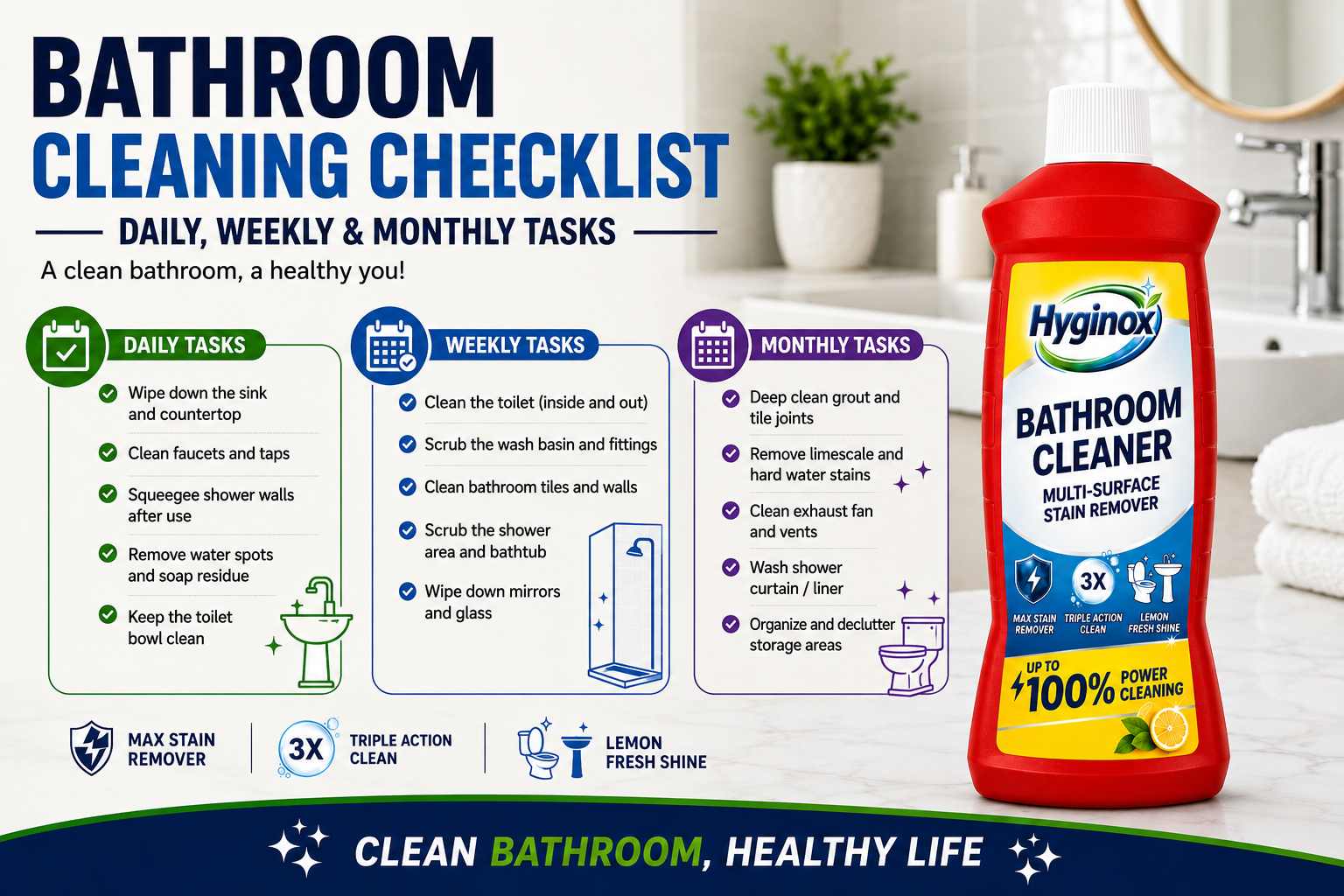
Bathroom Cleaning Checklist: Daily, Weekly and Monthly Tasks
Introduction
A bathroom gets dirty in layers. Some mess appears every day, like water splashes on the sink, mirror spots, and damp floors. Other problems, like soap scum, hard water stains, and grout discoloration, build up more slowly. A good bathroom cleaning checklist separates those tasks so you are not trying to do everything at once.
For most Indian homes, especially apartment bathrooms and family bathrooms with heavy daily use, the smartest approach is a routine that combines quick daily habits with one weekly clean and one monthly maintenance session. That makes the bathroom easier to manage and prevents the grime from turning into a long scrubbing job.
Quick Answer
The best bathroom cleaning checklist has three layers: daily tasks to dry and reset high-use surfaces, weekly tasks to remove soap scum and grime, and monthly tasks to tackle grout, drains, mineral buildup, and deep cleaning. This structure keeps the bathroom fresher and reduces the effort needed over time.
Key Takeaways
- Daily tasks stop water and soap residue from hardening.
- Weekly tasks handle soap scum, sink buildup, and dirty fittings before they get stubborn.
- Monthly tasks focus on grout, drains, taps, corners, and mineral deposits.
- Using the same routine every week reduces the chance of missed spots.
- A simple checklist is easier to follow than a vague cleaning goal.
- Ventilation and drying are cleaning products themselves.
Table of Contents
- Why a bathroom checklist works
- Daily bathroom tasks
- Weekly bathroom tasks
- Monthly bathroom tasks
- Problem vs prevention table
- Common mistakes
- Prevention tips
- FAQ section
- Hyginox recommendation and CTA
Why a bathroom checklist works
Direct Answer: A checklist works because it breaks bathroom care into short, repeatable jobs that prevent buildup before it becomes hard to remove. Instead of waiting for visible dirt, you maintain the bathroom continuously and avoid the heavy scrubbing cycle that happens when cleaning is delayed.
Bathrooms are high-moisture spaces, and moisture is the main reason soap scum, limescale, and mold all return so quickly. If you dry splash zones, clean the right areas at the right frequency, and keep ventilation moving, the room stays cleaner with much less effort.
Daily bathroom tasks
Direct Answer: Daily bathroom tasks should focus on drying, quick wiping, and preventing residue from settling. The goal is not deep cleaning every day. The goal is to stop moisture, soap, and dirt from staying on the surface long enough to harden.
A daily routine usually takes 3 to 5 minutes if the bathroom is already in decent condition. In homes with multiple users, this small effort makes a large difference because every use adds more water, soap, and humidity.
Daily checklist
- Wipe the sink after use so toothpaste and soap do not dry on the basin.
- Dry tap fittings and handles to reduce water spotting.
- Use a squeegee on shower walls or glass doors if they get wet often.
- Pick up hair and loose debris from the floor or drain area.
- Leave the exhaust fan running long enough to reduce humidity.
- Keep wet towels and mats from sitting in a damp heap.
Best daily habits for Indian homes
In Indian homes, bathrooms often see bucket baths, repeated rinsing, and frequent splashes. The most useful daily habit is drying high-splash zones: the sink edge, faucet base, shower wall, and floor corners. That single step helps prevent soap scum and hard water marks from forming in the first place.
Weekly bathroom tasks
Direct Answer: Weekly tasks should remove soap scum, body oils, dust, and grime from the surfaces that get touched and splashed every day. This is the routine that keeps the bathroom visually clean and prevents mineral residue from building into tougher stains.
Weekly cleaning is where a bathroom cleaner is usually most useful. It handles routine residue on tiles, fittings, shower walls, and the basin. If you skip the weekly clean, small bits of buildup can turn into a much harder monthly job.
Weekly checklist
- Clean the sink, basin, and faucet base with a bathroom-safe cleaner.
- Scrub shower walls or glazed tiles to remove soap scum.
- Wipe mirrors, glass doors, and chrome fittings.
- Clean visible grout lines and corners with a soft brush.
- Rinse the toilet exterior and sanitize touch points such and flush buttons.
- Check the floor edges for water spots or grime buildup.
Weekly areas people usually miss
Many bathrooms look clean in the middle but dirty at the edges. Pay attention to the underside of taps, the bottom edge of glass partitions, corners behind the bucket, and the area around floor drains. These are the places where grime hides and where a weekly routine saves the most time later.
Monthly bathroom tasks
Direct Answer: Monthly tasks are for the parts of the bathroom that collect slower buildup, such, drains, mineral spots, vents, and hidden corners. These tasks are deeper, but they should still be manageable if the daily and weekly routines are already in place.
Monthly maintenance is where you handle problems before they become visible from across the room. In hard-water homes, this is the time to descale taps, remove mineral spots, and clean grout with the right method. In humid homes, it is also the time to check mold-prone corners and the exhaust area.
Monthly checklist
- Deep clean grout lines with a grout-safe cleaner.
- Remove hard water stains from taps, glass, and tile edges.
- Clean the drain cover and remove trapped hair or residue.
- Wipe or vacuum exhaust fan covers if accessible.
- Check corners and behind fixtures for mold or mildew.
- Inspect sealants and grout for cracks or damage.
- Clean the toilet rim and hidden edges more thoroughly than in the weekly routine.
Monthly work that protects surfaces
Do not treat monthly cleaning like a chance to use the strongest product available. The goal is to keep the bathroom healthy and protect the finish. Use the right cleaner for the stain type, and if the tile or countertop is stone, keep acids away from sensitive surfaces.
Problem vs prevention table
Direct Answer: Bathrooms stay cleaner when each problem has a prevention habit attached to it. This table shows which routine helps prevent the most common bathroom issues.
| Problem | Best prevention habit | Best cleaning frequency |
|---|---|---|
| Soap scum | Wipe wet walls and use a bathroom cleaner weekly | Weekly |
| Hard water stains | Dry taps, glass, and splash zones after use | Weekly to monthly |
| Grout discoloration | Brush grout lines and keep the room ventilated | Monthly |
| Bad odors | Clean drains, mats, and hidden wet corners | Weekly |
| Mold or mildew | Reduce humidity and keep corners dry | Weekly to monthly |
How to clean smarter, not harder
Direct Answer: Smart bathroom cleaning means cleaning in the right order: dry first, then clean, then rinse, then dry again. That order prevents residue from being spread around and helps products work more effectively.
For example, if a bathroom has soap scum on the shower walls and hard water spots on the tap, do not attack everything with one rough scrubber. Use a bathroom cleaner for the film, a descaler for the mineral spot if the surface is compatible, and a soft brush for grout or corners. Matching the task to the stain saves time and protects the finish.
Common mistakes
Direct Answer: The most common mistakes are waiting too long between cleans, using too much product, and scrubbing delicate surfaces too aggressively. These habits can damage tile finishes and still leave the bathroom looking dull.
- Skipping the daily wipe-down because the bathroom “looks fine”
- Using one harsh product for every stain
- Leaving cleaner residue behind instead of rinsing properly
- Ignoring ventilation and moisture control
- Forgetting hidden areas like drain covers, hinges, and corners
Prevention tips
Direct Answer: Prevention is mostly about reducing moisture time, choosing the right cleaner, and cleaning before buildup hardens. Small habits matter more than occasional heavy scrubbing.
- Keep a microfiber cloth or squeegee in the bathroom for quick drying.
- Run the exhaust fan or open a window after bathing.
- Use a weekly cleaning slot so the job does not get delayed.
- Spot clean taps, mirrors, and shower walls before mineral spots dry.
- Do a monthly check of grout, drains, and hidden corners.
People Also Ask
How often should I clean a bathroom?
Do a quick daily wipe-down, a weekly clean, and a deeper monthly maintenance routine. That balance keeps the bathroom hygienic without making every cleaning session too long.
What should I clean daily in the bathroom?
Focus on high-touch and high-moisture areas such sink, taps, mirror spots, shower walls, and floor edges. Drying these areas is just them.
What is the best weekly bathroom task?
The best weekly task is a full wipe of tiles, fittings, and the basin with a bathroom cleaner. That removes soap scum and grime before it hardens.
What belongs in a monthly bathroom routine?
Monthly tasks should include grout cleaning, hard water stain removal, drain cleaning, vent cleaning, and checking sealant or grout condition.
Can a bathroom cleaner be used every day?
Yes, for light maintenance on high-use bathrooms, but it should be used according to the label and paired with drying habits instead of overuse.
Why do bathrooms smell even when they look clean?
Odors often come from drains, damp corners, mats, and hidden residue rather than visible dirt. Cleaning those areas and improving ventilation usually helps a lot.
Hyginox recommendation
For a routine that is easy to repeat, use a dedicated bathroom cleaner for weekly maintenance and pair it with quick daily drying habits. Hyginox Bathroom Cleaner is a practical option for that kind of schedule because it supports regular care without making the process complicated.
Conclusion
A bathroom cleaning checklist works best when it matches how bathrooms actually get dirty: daily moisture, weekly residue, and monthly buildup. Once the routine is split into those layers, the bathroom becomes much easier to maintain and less likely to develop stubborn stains or odors.
Keep the daily steps short, the weekly clean focused, and the monthly routine more detailed. That is the simplest way to keep the bathroom fresh, hygienic, and easier to manage over time.
CTA
Build a cleaning schedule that fits your bathroom use, and keep one good bathroom cleaner on hand for the weekly routine. A consistent system will save time and keep the space looking better between deep cleans.