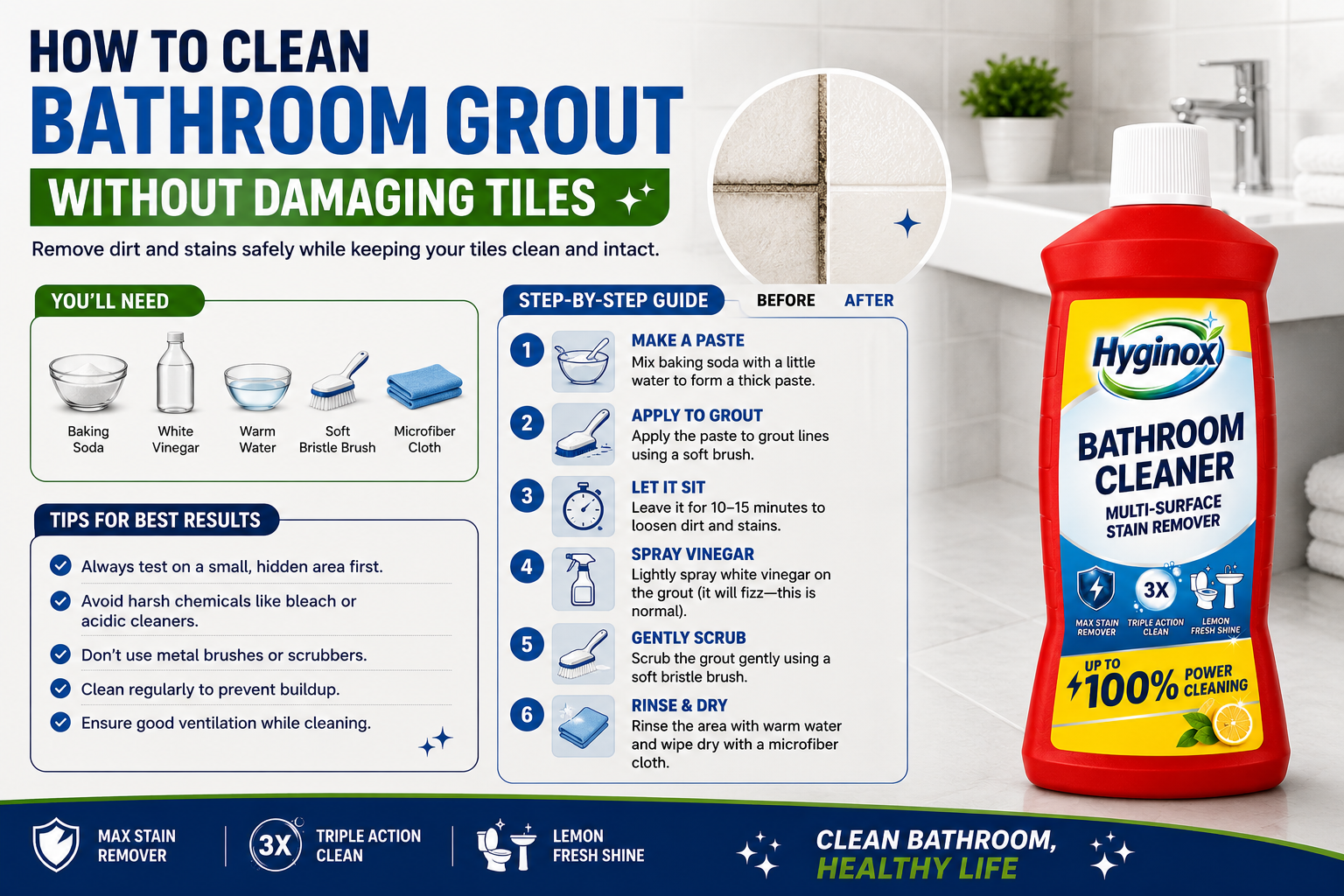
How to Clean Bathroom Grout Without Damaging Tiles
Introduction
Bathroom grout is one of the first places where dirt, soap scum, hard water residue, and mold stains start to show. In many Indian homes, especially bathrooms used multiple times a day, grout lines darken faster than the tiles around them. The challenge is not just cleaning the grout. It is cleaning it without scratching, dulling, or etching the tile surface beside it.
People often reach for harsh acids, steel wool, or strong bleach because they want fast results. That can backfire. The tile may lose its shine, polished stone can get etched, and grout can weaken if the wrong chemical is used too often. The safer approach is to match the cleaner to the grout type, use soft tools, and clean in a way that removes buildup without damaging the finish.
Quick Answer
To clean bathroom grout without damaging tiles: use a grout-safe cleaner or mild paste, let it dwell for a few minutes, scrub the grout line with a soft brush, and rinse thoroughly. Avoid wire brushes, steel wool, and strong acids on sensitive tiles like marble. Test the cleaner in a hidden area first if you are unsure about the surface.
Key Takeaways
- Grout is porous, so it traps soap scum, moisture, and mineral deposits more easily than tile.
- Soft-bristle brushes and microfiber cloths are safer than abrasive pads.
- Mild alkaline or pH-neutral cleaners work well for routine grout cleaning.
- Use descalers only on surfaces that are safe for acids, not on marble or limestone.
- Rinse and dry after cleaning to stop new buildup from forming quickly.
- Preventive maintenance is easier and safer than repeated deep scrubbing.
Table of Contents
- Why bathroom grout gets dirty
- How grout differs from tile
- Safe cleaning methods that protect tiles
- Comparison table: grout cleaner options
- Step-by-step grout cleaning method
- Common mistakes that damage tiles
- Prevention tips for long-term maintenance
- FAQ section
- Hyginox recommendation and CTA
Why bathroom grout gets dirty
Direct Answer: Bathroom grout gets dirty because it is porous and sits between tile joints where water, soap residue, shampoo, body oils, and minerals settle. Since grout absorbs more than tile, stains darken faster there and are harder to rinse away with ordinary wiping.
In many bathrooms, especially compact apartment bathrooms and family bathrooms with frequent use, the grout line becomes the collection point for everything that splashes, steams, or drips onto the wall and floor. Over time, the surface looks darker, patchier, or slightly greenish or black in wet corners where moisture stays longer.
Common causes of grout buildup
- Soap scum from body wash, shampoo, and bathing soap
- Hard water residue from repeated splashing and drying
- Mold or mildew in poorly ventilated spaces
- Body oils and everyday bathroom grime
- Dust and dirt that settle into damp grout lines
How grout differs from tile
Direct Answer: Tile is usually smooth and non-porous or lightly porous, while grout is porous and absorbs more moisture and residue. That means grout needs a different cleaning approach than the surrounding tile, even when both surfaces look dirty at the same time.
Cleaning grout the same way you clean tile often leads to over-scrubbing. Tile can usually tolerate a wipe-and-rinse routine, but grout often needs dwell time and targeted brushing. The wrong tools can also scratch polished tile or loosen grout from the joints.
| Surface | What it is like | Cleaning approach |
|---|---|---|
| Tile | Smoother, less absorbent, easier to wipe | Soft cloth, sponge, gentle cleaner |
| Grout | Porous, absorbent, stains faster | Targeted cleaner, dwell time, soft brush |
| Marble or stone tile | Acid-sensitive, can etch easily | pH-neutral stone-safe cleaner only |
Safe cleaning methods that protect tiles
Direct Answer: The safest grout cleaning methods use mild chemistry, soft tools, and controlled dwell time. A tile-safe bathroom cleaner, diluted hydrogen peroxide on compatible surfaces, or a baking soda paste can remove grime without harming the surrounding tile when used properly.
Method 1: Tile-safe bathroom cleaner
This is the most practical option for regular maintenance. Apply a bathroom cleaner designed for tiles and grout, let it sit briefly, then scrub only the grout line with a soft brush. This method works well for soap scum and general grime in most glazed tile bathrooms.
Method 2: Baking soda paste
For lighter buildup, mix baking soda with a small amount of water to form a paste. Apply it to grout lines, let it rest for a few minutes, and brush gently. Baking soda is useful because it lifts surface grime without being acidic cleaners.
Method 3: Hydrogen peroxide on compatible grout
Diluted hydrogen peroxide can help with dingy grout and some organic staining. It is best for white or light-colored grout and should be spot-tested first. Use it carefully and rinse well. Avoid mixing it with other chemicals, especially bleach or vinegar.
Method 4: Mild descaler for hard water buildup
If your grout is stained by mineral residue, a mild descaler can help. Use only on tile materials that are safe for acid-based products. Avoid this on marble, limestone, travertine, or other acid-sensitive stone. When in doubt, use a pH-neutral alternative.
Comparison table: grout cleaner options
Direct Answer: Different cleaners solve different grout problems. Choose based on whether the stain is greasy, mineral-based, or organic. This helps avoid unnecessary scrubbing and prevents damage to the tile edge.
| Cleaner | Best for | Tile safety | Notes |
|---|---|---|---|
| Bathroom cleaner | Soap scum, light grime | Generally safe for glazed tile | Good for routine use |
| Baking soda paste | Light buildup, dirty grout lines | Usually safe | Use a soft brush |
| Hydrogen peroxide | Organic stains, dingy grout | Spot-test first | Do not mix with bleach |
| Mild descaler | Hard water residue | Only on compatible tiles | Avoid on natural stone |
| Bleach | Occasional whitening of grout | Use carefully | Can be harsh on finishes and should not be mixed |
Step-by-step grout cleaning method
Direct Answer: The safest step-by-step method is to vacuum or rinse loose debris, apply the right cleaner to the grout line, let it dwell, brush gently, rinse well, and dry the tile surface so residue does not reattach.
- Identify the tile material and grout condition before choosing a cleaner.
- Remove loose dirt or dust from the area.
- Apply a grout-safe cleaner only on the grout lines or affected area.
- Let the product sit for a few minutes so it can break up buildup.
- Scrub gently with a soft-bristle brush, using short strokes.
- Rinse with clean water to remove loosened dirt and cleaning residue.
- Dry the tiles and grout with a microfiber cloth or towel.
Best brushing technique
Brush along the grout line rather than across the tile face. This keeps the cleaning action focused where the buildup is and reduces the chance of scratching glazed or polished tile. A small toothbrush-style grout brush is usually safer than a large stiff brush.
How long to let the cleaner dwell
Most grout cleaners only need a short dwell time of a few minutes. Leaving cleaner on too long is not always better, especially on delicate surfaces. Follow the label when possible and test on a hidden area if you are unsure about the tile finish.
When soap scum is the real problem
Direct Answer: If the grout looks greasy, dull, and slightly sticky, soap scum is likely a major part of the buildup. In that case, a degreasing bathroom cleaner usually works better than a descaler because the issue is film and residue, not just minerals.
Soap scum often appears in shower areas where body wash and shampoo run down the wall. It can trap dust and minerals, making the grout look much darker than it really is. If the grout improves after a bathroom cleaner but still looks chalky in spots, there may also be a hard water layer underneath.
When hard water residue is the real problem
Direct Answer: If the grout or tile edge looks white, chalky, or crusty, hard water residue is likely the main issue. Mineral deposits need a descaling action, not just a soap-cutting cleaner, because the stain is formed from calcium and magnesium rather than grease.
Hard water problems are common in homes with borewell water, apartment overhead tanks, or splash-heavy bathrooms. The residue often shows up near faucets, shower walls, floor edges, and anywhere water repeatedly dries on the same surface.
Why vinegar can help some grout and harm some tiles
Direct Answer: Vinegar can help loosen light mineral residue on glazed tile and some grout, but it should not be used on natural stone or acid-sensitive materials. A product that is safe for grout is not automatically safe for the tile around it.
That is why many homeowners damage tile while trying to clean grout. The cleaner reaches the grout line, but it also touches the tile face. On marble and similar stone, the acid can dull the shine or create a rougher patch. If you are unsure what your tile is made of, use a pH-neutral product or a purpose-built bathroom cleaner instead.
Common mistakes that damage tiles
Direct Answer: The biggest mistakes are using overly strong acids, scrubbing with abrasive tools, and letting residue sit on sensitive tile. These errors can scratch glazed surfaces, dull polished stone, and weaken grout over time.
- Using wire brushes or steel wool on tile edges
- Applying vinegar or strong descalers to marble and limestone
- Mixing bleach with vinegar or other cleaners
- Scrubbing too aggressively along grout joints
- Leaving dirty water or cleaner residue behind after wiping
- Cleaning too rarely, which turns light buildup into hardened stains
People Also Ask
Can I use bleach to clean bathroom grout?
Bleach can whiten grout, but it should be used carefully and never mixed with other cleaners. It does not remove mineral buildup descaler and can be too harsh for frequent use.
Will baking soda scratch tiles?
Baking soda is generally mild and safe for many glazed tiles when used paste with a soft brush. The main risk comes from using too much pressure or pairing it with abrasive scrubbing tools.
How do I know if my tile is acid-sensitive?
Marble, limestone, travertine, and some natural stones are acid-sensitive. If you are unsure, check the manufacturer label or test a hidden area with a stone-safe cleaner instead of vinegar or a strong descaler.
Why does grout get dark again so quickly?
Grout darkens again quickly when moisture lingers, airflow is poor, or the grout is not sealed well. Soap scum and minerals also reattach to damp grout more easily than to dry tile.
Can professional cleaning restore badly stained grout?
Yes. Professional cleaning can help when buildup is severe, grout is deeply stained, or the wrong product has already been used. In some cases, resealing or regrouting may be needed for a proper finish.
What is the safest brush for grout?
A soft or medium-soft grout brush with firm but flexible bristles is usually safest. It cleans the grout line without scraping the tile surface brushes or stiff scouring pads.
Prevention tips
Direct Answer: Preventing grout stains is mostly about reducing how long water, soap, and grime stay on the surface. Drying wet zones, improving ventilation, and cleaning lightly but often will keep grout cleaner for longer.
- Use a squeegee or dry cloth after showers to remove excess water.
- Run the exhaust fan to reduce humidity and drying time.
- Do a weekly wipe-down before stains harden.
- Seal grout where appropriate so it absorbs less moisture.
- Use a bathroom cleaner for routine maintenance instead of waiting for visible buildup.
Indian household scenario
In a busy family bathroom, grout often gets splash marks from bucket baths, soap residue from daily showers, and hard water spots around taps. A 5-minute routine after use can make a large difference. Wiping the wet wall, drying the floor edge, and ventilating the room reduces both soap scum and mineral staining.
When professional help may be needed
Direct Answer: Professional help may be needed when the grout remains stained after repeated safe cleaning, when mold returns quickly, or when the tile is made of delicate stone that should not be cleaned aggressively. A professional can restore grout without harming the tile finish.
This is especially useful if the grout has turned patchy across a large bathroom or if the tile surface is polished and showing dullness from over-cleaning. In some cases, the problem is not just dirt. Old grout may need sealing, repair, or replacement.
Hyginox recommendation
For regular bathroom upkeep, a cleaner that handles soap scum, light residue, and everyday grime without being overly harsh is the most practical option. Hyginox Bathroom Cleaner fits that routine well because it supports safe maintenance on common bathroom surfaces while keeping the cleaning process simple.
Conclusion
Bathroom grout can be cleaned safely if you treat it different surface from the tile around it. The key is to match the cleaner to the stain, use soft tools, and avoid aggressive scrubbing or harsh acids on sensitive tile. That keeps the grout looking cleaner without sacrificing the finish of the bathroom around it.
If you stay ahead of moisture, rinse residue quickly, and clean lightly on a regular schedule, grout maintenance becomes much easier. In the long run, the safest cleaning is the one that prevents stains from becoming a scrubbing project in the first place.
CTA
For routine bathroom care, use a purpose-built cleaner that targets soap scum and everyday residue without being too harsh on tiles or grout. A consistent maintenance routine will save time and protect the finish of your bathroom surfaces.