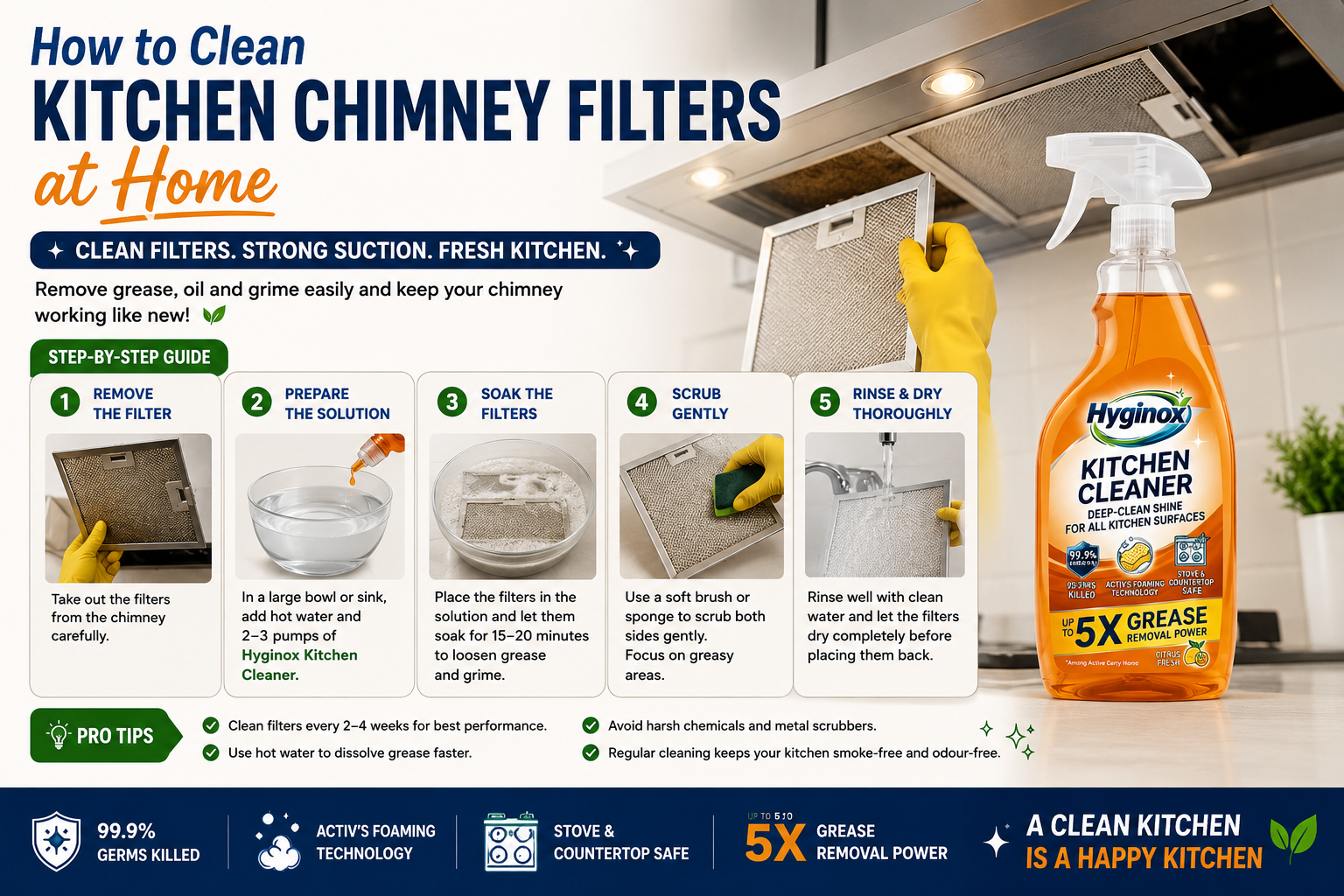
How to Clean Kitchen Chimney Filters at Home — Step-by-Step Guide
Introduction
Your kitchen chimney filter works silently, trapping grease, cooking odors, and smoke from daily meals. But after weeks of active cooking—especially in Indian households where stir-frying and high-heat cooking are common—those filters accumulate stubborn grease deposits that reduce ventilation and create unpleasant kitchen odors.
Many homeowners assume dirty filters require professional cleaning or replacement. In reality, most chimney filters can be cleaned effectively at home using simple methods and materials you already have in your kitchen. This guide covers step-by-step cleaning techniques, natural solutions, common mistakes to avoid, and maintenance strategies to keep filters working efficiently for longer.
Quick Answer
To clean kitchen chimney filters: Remove the filter from the chimney, soak it in hot water mixed with dish soap and baking soda for 30 minutes, scrub gently with a soft brush to remove grease, rinse thoroughly under running water, and air dry completely before reinstalling. For heavily soiled filters, soak overnight or use a mixture of baking soda and vinegar.
Key Takeaways
- Clean chimney filters monthly to maintain optimal ventilation and prevent odor buildup
- Soak filters in hot water with dish soap and baking soda to dissolve grease effectively
- Avoid using harsh chemicals or high-pressure water jets that can damage filter mesh
- Air dry filters completely before reinstalling to prevent mold growth
- Replace activated carbon filters every 3–6 months for continued odor control
- Regular cleaning extends filter life and reduces the need for expensive replacements
Table of Contents
- Why Kitchen Chimney Filters Get Dirty
- Types of Chimney Filters and Their Cleaning Needs
- Step-by-Step Guide to Clean Chimney Filters
- DIY Cleaning Methods and Natural Solutions
- When to Use Commercial Chimney Cleaners
- Common Mistakes That Damage Filters
- Prevention Tips for Longer Filter Life
- Frequently Asked Questions
- Conclusion and Hyginox Recommendation
Why Kitchen Chimney Filters Get Dirty
Direct Answer: Kitchen chimney filters accumulate grease because cooking releases fine oil particles that rise with heat and smoke. These particles stick to the filter mesh, trapping moisture and food residue. In Indian kitchens, frequent use of oil-based cooking (tempering, frying, stir-frying) accelerates grease buildup more than Western cooking patterns.
Understanding why filters get dirty helps you establish effective cleaning schedules. When you cook—especially at high temperatures—cooking oils vaporize and create aerosol particles. These particles float upward with hot air and get trapped in the chimney filter's mesh structure. Over time, grease particles bond together, forming stubborn deposits that ordinary vacuuming cannot remove.
The problem intensifies in:
- High-volume cooking homes: Families that cook multiple times daily see faster grease accumulation
- Small kitchen spaces: Apartments with limited ventilation trap more oil particles
- Oil-heavy cuisines: Indian cooking techniques (tempering, deep frying) produce more oil vapor than low-heat cooking
- Poorly maintained chimneys: Filters that haven't been cleaned in months develop hardened grease crusts
Types of Chimney Filters and Their Cleaning Needs
Direct Answer: Most kitchen chimneys use two types of filters: mesh filters (made of aluminum or stainless steel) that trap grease and particles, and activated carbon filters that absorb odors. Mesh filters are washable and reusable; activated carbon filters need replacement every 3–6 months.
Mesh Filters (Aluminum or Stainless Steel)
These are the primary grease-catching filters. They feature a woven mesh or layered structure that allows air to pass while trapping oil particles and food residue. Mesh filters are durable and can be cleaned and reused indefinitely.
Cleaning frequency: Monthly for active-use kitchens; every 6–8 weeks for moderate use.
Cleaning method: Hot water, dish soap, and gentle scrubbing. These filters withstand soaking and manual cleaning without damage.
Activated Carbon Filters
These cylindrical or flat filters sit behind mesh filters and absorb cooking odors and volatile compounds. They cannot be washed and reused—once saturated, they must be replaced.
Replacement frequency: Every 3–6 months, depending on cooking intensity.
Cost consideration: Regular replacement is necessary; cleaning does not restore odor-absorption capacity.
Step-by-Step Guide to Clean Chimney Filters
Direct Answer: Turn off the chimney and let it cool. Remove the filter (usually by unclipping or unscrewing). Soak in hot soapy water for 30 minutes. Scrub gently with a soft brush. Rinse under running water until water runs clear. Air dry completely. Reinstall and test the chimney.
Step 1: Prepare Your Workspace
Safety first: Turn off the chimney and wait 10 minutes for it to cool. Avoid burns from hot metal filters or residual heat.
Choose a large basin or bathtub to soak filters. Newspaper or old cloth will catch drips. Have a soft-bristled brush (not wire brushes) and clean towels ready.
Step 2: Remove the Filter
Most chimney filters are held by simple clips, latches, or screws. Refer to your chimney manual for specific removal instructions. Typically:
- Open the chimney panel or front cover
- Unclip or unscrew the filter frame
- Gently slide the filter out (do not force it)
For multiple stacked filters, note their order before removal so you reinstall them correctly.
Step 3: Create the Cleaning Solution
Fill a large basin with hot water (not boiling—around 60°C/140°F is ideal). Add:
- 2–3 tablespoons of dish soap
- 2–3 tablespoons of baking soda (acts mild abrasive and degreaser)
- Optional: 1 tablespoon of vinegar for extra grease-cutting power
Stir well until the solution is uniform and slightly foamy.
Step 4: Soak the Filter
Place the filter flat in the basin, ensuring it is fully submerged. Let it soak for 30 minutes to 1 hour. For heavily soiled filters with months of grease buildup, soak overnight (8–12 hours). The hot water and soap soften grease deposits, making them easier to remove.
Pro tip for stubborn grease: Replace the water halfway through and resoak for another 30 minutes.
Step 5: Scrub Gently
After soaking, use a soft-bristled brush (or old toothbrush for detailed areas) to gently scrub the filter mesh. Work in one direction to avoid damaging the mesh structure:
- Brush the top surface of the mesh
- Flip and brush the underside
- Pay extra attention to corners and thick grease patches
Never use: Wire brushes, steel wool, or scouring pads—these damage the mesh and reduce filter effectiveness.
Step 6: Rinse Thoroughly
Hold the filter under running water and rinse both sides until the water runs completely clear. This removes soap residue and loosened grease particles. For stubborn deposits, gently scrub again while rinsing.
Check: If water still appears cloudy or carries grease, repeat the soaking and rinsing process.
Step 7: Air Dry Completely
Place the filter on a clean cloth or rack and allow it to air dry completely—at least 2–3 hours. Do not install a wet filter, moisture can promote mold growth and reduce ventilation efficiency. On sunny days, you can place the filter in direct sunlight, which also provides natural disinfection.
Step 8: Reinstall the Filter
Once completely dry, reinstall the filter in reverse order of removal. Ensure it clicks or locks securely into place. Turn on the chimney and verify normal operation.
DIY Cleaning Methods and Natural Solutions
Key Fact: Baking soda, vinegar, and hot water are commercial chimney cleaners for routine filter maintenance. These natural solutions work because they chemically break down grease without damaging filter materials.
Method 1: Hot Water and Dish Soap (Most Effective)
This is the standard method for regular maintenance. The combination of hot water (which liquefies grease) and dish soap (which breaks down oil molecules) removes 80–90% of grease buildup.
Recipe: 1 part dish soap to 10 parts hot water + 2 tablespoons baking soda per liter
Best for: Monthly cleaning, light to moderate grease
Method 2: Baking Soda and Vinegar Paste
For stubborn, hardened grease, create a paste:
- Mix equal parts baking soda and white vinegar into a thick paste
- Apply directly to grease patches on the dry filter
- Let sit for 15–20 minutes
- Scrub with a soft brush and rinse thoroughly
The acid-base reaction (vinegar is acidic, baking soda is basic) creates fizzing action that breaks apart grease.
Best for: Heavily soiled filters or filters not cleaned for 2+ months
Method 3: Boiling Water Soak
For filters with extremely thick grease crusts:
- Bring a large pot of water to a boil
- Add 3–4 tablespoons of baking soda
- Carefully place the filter in the boiling water
- Simmer for 15–20 minutes
- Remove and let cool slightly before scrubbing
Caution: Boiling water can slightly warp aluminum filters if overused; limit to 2–3 times per year.
Best for: Emergency deep cleaning; not recommended for regular monthly cleaning
Method 4: Lemon Juice and Baking Soda
Lemon's natural acidity provides additional degreasing power:
- Squeeze juice from 2–3 lemons into hot water
- Add 2 tablespoons baking soda and dish soap
- Follow standard soaking and scrubbing process
Benefit: Leaves a fresh scent and provides natural antimicrobial action
When to Use Commercial Chimney Cleaners
Direct Answer: Use commercial cleaners for filters that have not been cleaned for 6+ months, show rust or oxidation, or when DIY methods fail to remove grease. Commercial degreasers contain stronger surfactants but require careful application to avoid damaging the filter.
Situations for Commercial Cleaners
- Severely neglected filters: Filters that haven't been cleaned in a year or more may have hardened, oxidized grease that natural methods cannot remove
- Rust or discoloration: If filters show brown or black oxidation, commercial cleaners help restore appearance and function
- Persistent odor: When odor remains even after cleaning, commercial antimicrobial solutions help
How to Use Commercial Cleaners Safely
Always follow product instructions carefully:
- Wear gloves to protect hands from caustic chemicals
- Use in well-ventilated areas
- Soak time varies by product (typically 15–45 minutes)
- Rinse thoroughly to remove all chemical residue
- Air dry completely before reinstalling
Note: Never mix commercial cleaners with vinegar or baking soda, reactions can produce toxic fumes.
Common Mistakes That Damage Filters
Expert Summary: Most filter damage occurs from aggressive cleaning methods or improper installation. Understanding what not to do extends filter lifespan and maintains cleaning efficiency.
Mistake 1: Using Wire Brushes or Steel Wool
Wire brushes and steel wool scratch and tear the delicate mesh, creating holes that allow grease and particles to pass through without being trapped. Once damaged, filter effectiveness drops significantly.
Solution: Always use soft-bristled brushes or old toothbrushes for gentle scrubbing.
Mistake 2: High-Pressure Water Jets
Pressure washers or forceful hose spray can deform the mesh structure and push grease deeper into the filter instead of removing it.
Solution: Use gentle running water from a faucet for rinsing.
Mistake 3: Installing Wet Filters
Reinstalling filters before they are completely dry traps moisture, which promotes mold growth, reduces ventilation, and creates odors.
Solution: Air dry for at least 2–3 hours, or use a hair dryer on low heat for faster drying.
Mistake 4: Forgetting to Replace Activated Carbon Filters
Many homeowners clean the mesh filter but forget that activated carbon filters cannot be cleaned—only replaced. Once saturated, they no longer absorb odors, even if they look clean.
Solution: Set a 3–6 month replacement reminder in your phone or calendar.
Mistake 5: Using Boiling Water Too Frequently
While boiling water is effective, excessive heat can warp aluminum filters or damage filter seals over time.
Solution: Reserve boiling water soaks for deep cleaning 2–3 times yearly; use lukewarm water monthly.
Mistake 6: Mixing Chemicals
Combining vinegar with commercial cleaners, bleach, or ammonia creates dangerous fumes.
Solution: Use either natural solutions OR commercial products—never mix.
Prevention Tips for Longer Filter Life
Key Fact: Consistent prevention reduces grease buildup by 40–50%, extending filter life and maintaining superior ventilation year-round.
Establish a Monthly Cleaning Schedule
Don't wait until the filter is visibly filthy. Monthly cleaning removes fresh grease deposits before they harden and oxidize. A quick 30-minute monthly clean prevents emergencies and reduces the effort needed.
Use Chimney Covers for Infrequent Use Periods
During seasons when you use your kitchen less (e.g., summers in very hot climates), cover the chimney opening to prevent dust and pollen accumulation.
Optimize Cooking Practices
While you can't eliminate cooking oil, certain practices reduce airborne grease:
- Keep the chimney running 2–3 minutes before cooking begins to establish airflow
- Use lids on pans during high-heat cooking to contain splatters
- Avoid extremely high flame settings when possible (use medium-high instead of maximum)
- Leave the chimney running 5 minutes after cooking ends to clear residual vapors
Keep Track of Activated Carbon Filter Replacement
Mark your calendar or set phone reminders for activated carbon filter replacement every 4–6 months (depending on cooking frequency). Premature replacement costs money, but delayed replacement reduces odor control.
Maintain Proper Chimney Ductwork
Ensure the exhaust duct is clear and unobstructed. Blocked ducts force your chimney to work harder and accumulate grease faster. Check annually and remove lint or debris.
Use the Right Wattage Chimney for Your Kitchen
Chimneys that are undersized for your kitchen cannot handle the volume of cooking vapors, leading to incomplete grease capture and faster filter saturation. Consult your chimney specifications and kitchen size.
FAQ Section
Q1: How often should I clean my kitchen chimney filter?
A: For active Indian kitchens (cooking 1–2 times daily), clean mesh filters monthly. For moderate use (3–4 times weekly), clean every 6–8 weeks. Check your filter visually—if grease is visible or cooking smells linger, it's time to clean.
Q2: Can I put the chimney filter in the dishwasher?
A: Most stainless steel or aluminum mesh filters tolerate dishwasher cleaning on gentle cycles, but hand washing with hot water and baking soda is safer and more effective. Dishwashers may not remove all grease and can damage sensitive filter seals. Hand washing gives you more control.
Q3: What causes a burning smell from the chimney after cleaning?
A: Burning smells usually indicate cleaning residue (soap, vinegar) remains on the filter. Rinse more thoroughly until no soap bubbles appear. Dry completely before reinstalling. If the smell persists, check for dust accumulation on heating elements inside the chimney.
Q4: How long do activated carbon filters last?
A: Activated carbon filters typically last 3–6 months in regular-use kitchens. Their odor-absorption capacity diminishes over time and cannot be restored by cleaning. Replacement is necessary—they are not reusable like mesh filters.
Q5: Why is my filter still smelly after cleaning?
A: Persistent odors suggest odor-absorbing activated carbon filters are saturated (need replacement), or the chimney ductwork contains trapped grease. Clean the chimney filter thoroughly, replace activated carbon filters, and consider professional duct cleaning if odor remains.
Q6: Is it safe to use bleach to clean chimney filters?
A: Bleach is too harsh for chimney filter mesh and can cause corrosion or discoloration. It's unnecessary—baking soda and vinegar are more effective and safer. If you must use bleach, dilute heavily (1 part bleach to 20 parts water), and never mix with vinegar or ammonia.
Q7: Can I use the chimney with a slightly damp filter?
A: No—even slight dampness traps moisture, promotes mold growth, and reduces air suction efficiency. Always ensure filters are completely dry (at least 2–3 hours air drying) before reinstalling.
Q8: What's the difference between mesh and charcoal filters?
A: Mesh filters trap grease and particles and are reusable after cleaning. Charcoal (activated carbon) filters absorb odors and must be replaced, not cleaned. Most chimneys use both—mesh first, then charcoal behind it for complete odor control.
Conclusion
Kitchen chimney filters are workhorses in Indian households, silently managing grease and odors from daily cooking. With simple, cost-effective cleaning methods—hot water, dish soap, and baking soda—you can keep them functioning optimally for years without expensive professional services.
Regular monthly cleaning prevents grease from hardening, extends filter lifespan, and maintains superior ventilation. By understanding why filters get dirty, using gentle cleaning techniques, and avoiding common mistakes, you transform filter maintenance from a neglected chore into a manageable routine.
The key is consistency. A quick 30-minute monthly cleaning prevents emergencies and keeps your kitchen fresh and free of cooking odors.
Hyginox Recommendation
Regular chimney filter maintenance is the foundation of a clean, hygienic kitchen. Beyond filter cleaning, a comprehensive approach to kitchen cleanliness includes regular degreasing of kitchen surfaces, maintaining exhaust ductwork, and managing moisture to prevent mold growth. For heavily soiled filters or stubborn grease deposits, purpose-built degreasers designed for kitchen equipment can complement your home cleaning routine.
Call to Action
Start your monthly filter cleaning routine today. Check your kitchen chimney—has it been cleaned in the last month? If not, gather your materials (hot water, dish soap, baking soda, soft brush) and give it 30 minutes. You'll immediately notice improved airflow and fresher kitchen air. For deeply soiled filters or persistent odors, consider combining natural cleaning methods with a quality degreaser designed for kitchen equipment to achieve professional-level results at home.