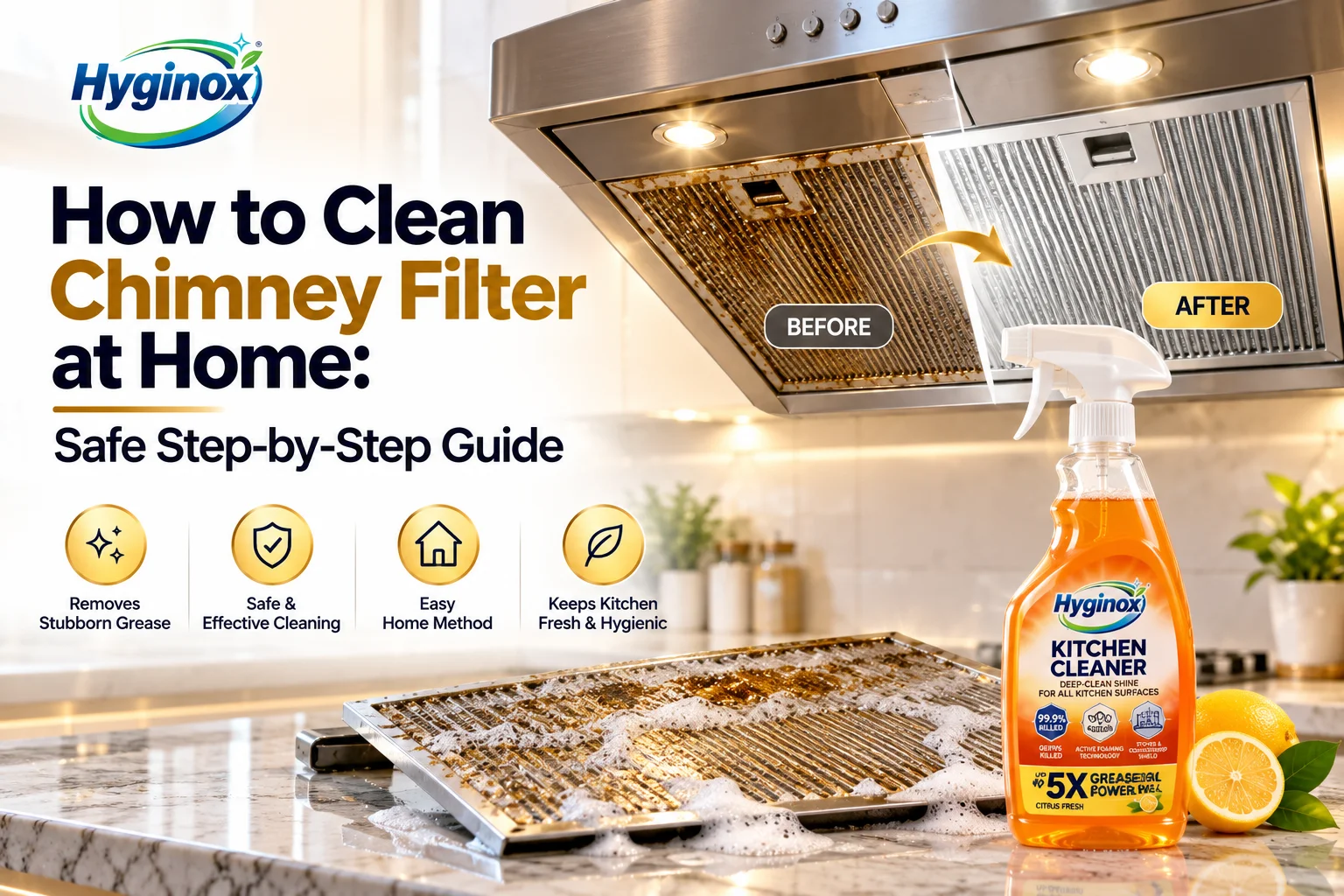
When cooking oil, tadka and steam rise from the stove, the kitchen chimney catches a share of the airborne grease. Over time, that oil turns into a sticky layer on the filter, traps dust and can make routine cleaning feel like hard work. Knowing how to clean chimney filter at home starts with identifying the filter type and using a method that will not damage it.
This guide explains how to clean washable metal filters, what to do with charcoal filters, how to deal with stubborn grease, and when a low-suction problem needs more than a filter wash. Because chimney designs differ, your appliance's user manual should always take priority over general advice.
Quick answer: how to clean a chimney filter
Switch off and disconnect the chimney from power, then let it cool. Check that the filter is washable and remove it as instructed in the manual. Soak a washable metal filter in warm water with dishwashing liquid, gently brush away grease, rinse thoroughly and let it dry completely before refitting. Do not wash charcoal or paper filters unless the manufacturer specifically says they are washable.
Why chimney filters collect sticky grease
Cooking releases tiny oil droplets along with hot air and steam. The chimney pulls this mixture toward the filter, where much of the grease gets trapped. Repeated frying, shallow frying, tadka and high-heat cooking can build up residue more quickly than occasional low-oil cooking. When a filter is left dirty for a long time, the film becomes thicker and harder to remove.
A greasy filter may contribute to weaker airflow, lingering cooking odours and more residue around the chimney. It does not automatically mean the motor is faulty. Start with the parts that the manual identifies as user-cleanable, then investigate further only if the problem remains.
Identify your chimney filter before washing it
The most important step in learning how to clean chimney filter at home is to identify the part you are about to wash. The word “filter” can refer to different components, and the same method is not suitable for every one.
1. Mesh or cassette grease filter
A mesh filter has fine layers or a woven-looking surface that traps oil. Many metal mesh filters are removable and washable, but aluminium mesh can bend or tear if scrubbed harshly. Follow the manufacturer's instructions for water temperature, cleaning products and whether dishwasher use is allowed.
2. Baffle filter
A baffle filter usually has curved metal channels that guide airflow and collect grease. Many are washable, but their recommended cleaning interval and dishwasher compatibility vary by model. Clean along the channels with a soft brush, rather than trying to force a brush through the metal folds.
3. Activated-carbon or charcoal filter
Charcoal filters are commonly used in recirculating chimneys to help reduce odours. Many are designed to be replaced rather than washed; water can damage their filtering media. Replace them according to the manual and the maker's service guidance. Do not assume a dark, greasy-looking filter is washable just because it fits behind a metal filter.
4. Filterless or auto-clean models
“Filterless” and “auto-clean” do not mean that every part is maintenance-free. Some models collect oil in a removable tray or cup; others use a heat or collection cycle to manage internal grease. Empty and clean user-removable collectors as directed, and do not open the motor compartment unless the manual explicitly identifies a user-serviceable part.
For a first-time owner, how to clean chimney filter at home comes down to three checks: identify the material, use only an approved cleaning method and allow the part to dry fully.
What you need for routine chimney filter cleaning
- Rubber or household cleaning gloves
- A basin, sink or tub large enough for the washable filter
- Warm water and ordinary dishwashing liquid
- A soft-bristled brush or non-abrasive sponge
- A microfiber cloth and a drying rack or clean towel
- A manufacturer-approved degreaser, only if the manual permits it and ordinary dishwashing liquid is not enough
Lay an old towel or newspaper below the work area to catch drips. Avoid wire brushes, steel wool, sharp scrapers and aggressive scouring pads; these can deform mesh, scratch finishes or damage coatings.
How to clean chimney filter at home: step-by-step method
- Switch off and isolate the power. Turn the chimney off and disconnect it from the power supply if you can do so safely. Let hot surfaces cool. Never work on the chimney while it is running, and keep water away from sockets, lights, controls and the motor area.
- Read the removal instructions. Check the user manual for the release mechanism. Support the filter with one hand while opening its clips or latches. Do not force a stuck filter or remove sealed panels. If screws or panels expose wiring or internal electrical parts, stop and arrange authorised service.
- Remove loose grease first. Use a paper towel or cloth to lift away accessible, loose grease from the removable metal filter. Do not push debris deeper into mesh or scrape it with a knife.
- Prepare a warm, soapy soak. Fill a basin with warm—not boiling—water and add dishwashing liquid according to its label. Submerge the washable metal filter if the manual allows soaking. Around 15–30 minutes is a reasonable starting point for ordinary grease; use the maker's directions if they specify a different method or time.
- Brush gently. Use a soft brush or sponge to lift softened grease. On a baffle filter, follow the direction of the channels. On mesh, use light pressure and avoid flattening the layers. If residue remains, repeat the soak rather than increasing force.
- Rinse both sides. Rinse with clean water until visible soap and loosened grease have gone. Do not use a pressure washer or force a high-pressure jet through delicate mesh.
- Dry the filter completely. Place it on a clean rack or towel in a ventilated area. Wait until it is fully dry before refitting. A damp filter should not be reinstalled.
- Refit and check. Put the filter back in the correct orientation and make sure every latch is secure. Restore power only after the part is dry and correctly fitted. If airflow remains weak or an unusual noise continues, stop and arrange a service check.
These steps provide a sensible routine for many washable metal filters, but the manual for your exact make and model is the final authority. Manufacturer guidance also distinguishes washable metal grease filters from charcoal or paper filters that may require replacement.
How to remove heavy or hardened grease from a chimney filter
If the filter has not been cleaned for months, one quick rinse is unlikely to remove all the buildup. The safest approach is to soften the residue gradually. Start with a fresh warm-water and dishwashing-liquid soak, then use a soft brush and repeat if needed. A second soak is usually preferable to scraping, boiling or applying a stronger chemical without checking compatibility.
For persistent grease, use only a degreaser that the filter manufacturer permits. Read the product label, wear gloves, ventilate the area and rinse the filter thoroughly. Test any allowed product on a small, inconspicuous part if the instructions recommend it. If grease remains bonded to the metal after repeated safe cleaning, ask the appliance's service team for advice rather than experimenting with caustic products.
Do not assume that adding more ingredients makes a cleaning solution stronger. Baking soda and vinegar react with one another, so combining them is not automatically a better way to cut grease. Never mix cleaning products, especially bleach with acids or ammonia, and never combine a commercial cleaner with another product unless the labels explicitly permit it.
When deciding how to clean chimney filter at home, choose a method that matches the filter material; a stronger chemical is not automatically a better or safer option.
What not to use on chimney filters
- Caustic soda or strong oven cleaner: these may corrode or discolour aluminium and can damage coatings. Use them only if the appliance manufacturer specifically approves the product.
- Boiling water: very hot water can create a scald risk and may be unsuitable for some filter materials or finishes. Warm water is the safer default unless the manual says otherwise.
- Wire brushes and steel wool: these can tear mesh, scratch surfaces or remove protective finishes.
- Pressure washers: strong jets can deform delicate mesh or push residue into areas that are difficult to rinse.
- Water near electrical parts: never spray the motor, lights, controls, wiring or inside electrical housings.
- Washing non-washable carbon or paper filters: replace these according to the manufacturer's instructions rather than soaking them.
If you are unsure which material your filter uses, pause before cleaning: the safest way to decide how to clean chimney filter at home is to check the model manual or ask the manufacturer before soaking the part.
For anyone learning how to clean chimney filter at home, it is useful to clean the removable filter and the exterior as separate tasks so water stays away from electrical parts.
How to clean the outside of a kitchen chimney
While the removable filter dries, wipe the canopy and accessible exterior with a soft cloth and a cleaner suitable for that finish. For stainless steel, use a product approved for stainless steel and wipe in the direction of the grain. For glass panels, choose a glass-safe product and apply it to a cloth rather than spraying into seams or controls.
Never flood the canopy with water or spray cleaner directly into vents, lamps, switches or the motor compartment. If the exterior is painted or coated, test the cleaner on a hidden patch first. For greasy tiles, cabinets or slabs beside the chimney, a surface-appropriate kitchen degreaser can help with the surrounding residue; see the Hyginox Kitchen Cleaner instructions and confirm the product is suitable for the exact surface before use.
For a fuller plan for sticky oil on the stovetop, backsplash and cabinets, read our guide to removing kitchen grease stains. If splashes reach a stone floor, check the guidance in our granite and marble floor-care guide before using a cleaner on the floor. You can also use the practical criteria in our floor-cleaner buying guide when choosing a product for routine floor maintenance.
For people searching how to clean chimney filter at home, a safe repeatable routine matters more than an aggressive one-off treatment.
How often should you clean a chimney filter?
There is no single interval that suits every chimney. The right schedule depends on the filter material, the brand's instructions, how often you cook and how much frying or tadka you do. For a busy Indian kitchen, inspect the filter regularly and clean it as soon as a sticky film or visible grease builds up. Some manufacturers recommend cleaning metal grease filters every 10–15 days for frequent use; other models allow a longer interval. Follow your own manual rather than treating any generic schedule as universal.
A simple routine is to wipe the accessible exterior when it looks greasy, check the filter during regular kitchen cleaning, and keep track of charcoal-filter replacement dates where applicable. If cooking smells linger, inspect both the washable filter and any odour filter specified in the manual. Do not wash the charcoal filter unless its maker explicitly says it is washable.
If you are researching how to clean chimney filter at home because suction has dropped, remember that cleaning the filter addresses only one possible cause.
Why is the chimney still noisy or low on suction after cleaning?
A filter wash can remove one common restriction, but it cannot fix every ventilation issue. If suction still seems weak, check only the user-accessible items described in your manual: make sure the filter is fitted correctly, check the oil collector if your model has one, and look for a clearly visible external obstruction. Do not dismantle the motor or electrical housing.
- Persistent low suction: the duct may be blocked, the installation may be unsuitable, or the motor may need servicing.
- Unusual vibration or grinding: stop using the chimney and contact authorised service.
- Odour after filter cleaning: a charcoal filter may be saturated, or grease may remain in a collector or duct. Follow the manual's replacement and service instructions.
- Oil dripping: inspect and clean the designated oil collector if the manual allows; call a technician if oil is coming from an internal or inaccessible area.
Common questions about chimney filter cleaning
Can I wash a chimney filter with dishwashing liquid?
Dishwashing liquid is suitable for many washable metal grease filters. Use it with warm water and a soft brush, then rinse and dry the filter completely. Check the model manual first, especially if the filter is coated, delicate or not made of metal.
Can I clean a charcoal filter at home?
Most activated-carbon or charcoal filters are replaced rather than washed. Follow the exact manufacturer's instructions; do not soak or rinse a filter unless the manual expressly confirms it is washable.
Can I put a chimney filter in the dishwasher?
Only if the manual says that the specific filter is dishwasher-safe. Filter materials and finishes differ, so hand washing is the safer default when compatibility is uncertain.
Does an auto-clean chimney mean the filter never needs cleaning?
Not necessarily. Auto-clean systems differ. You may still need to clean a removable oil collector or metal grease filter, or replace a charcoal filter. Follow the maintenance instructions for your model.
Why should the filter be completely dry before refitting?
Drying helps prevent water from being trapped inside the appliance and avoids refitting a damp component. Leave the filter in a ventilated place until fully dry, then lock it back into position securely.
The safest answer to how to clean chimney filter at home is to follow the appliance-specific instructions, then verify that every washable part is dry and correctly fitted.
Final checklist before you switch the chimney on
- The power was disconnected before the filter was removed.
- The filter type was confirmed and washed only if approved by the manual.
- Grease and soap residue have been rinsed away.
- The filter is completely dry and correctly locked into place.
- No water or cleaning product has entered electrical components.
- Any continuing suction, noise or oil-leak problem will be checked by a qualified technician.
Learning how to clean chimney filter at home is mainly about regular, gentle maintenance—not stronger chemicals or harder scrubbing. Identify the filter, use a warm soapy soak where permitted, rinse and dry thoroughly, and follow the instructions for charcoal filters and auto-clean systems. This helps you care for the appliance without risking damage through an unsuitable cleaning method.
Keep this guide handy when planning how to clean chimney filter at home, but follow your appliance manual if its instructions differ.
For Indian households with frequent frying, how to clean chimney filter at home should be guided by visible grease buildup and the appliance manual rather than a one-size-fits-all timetable.
Reliable manufacturer guidance
For model-specific instructions, review the guidance from Electrolux India on cleaning a kitchen chimney and Crompton's kitchen chimney cleaning guide. Always use the user manual supplied with your own appliance for approved cleaning methods and replacement intervals.