Introduction
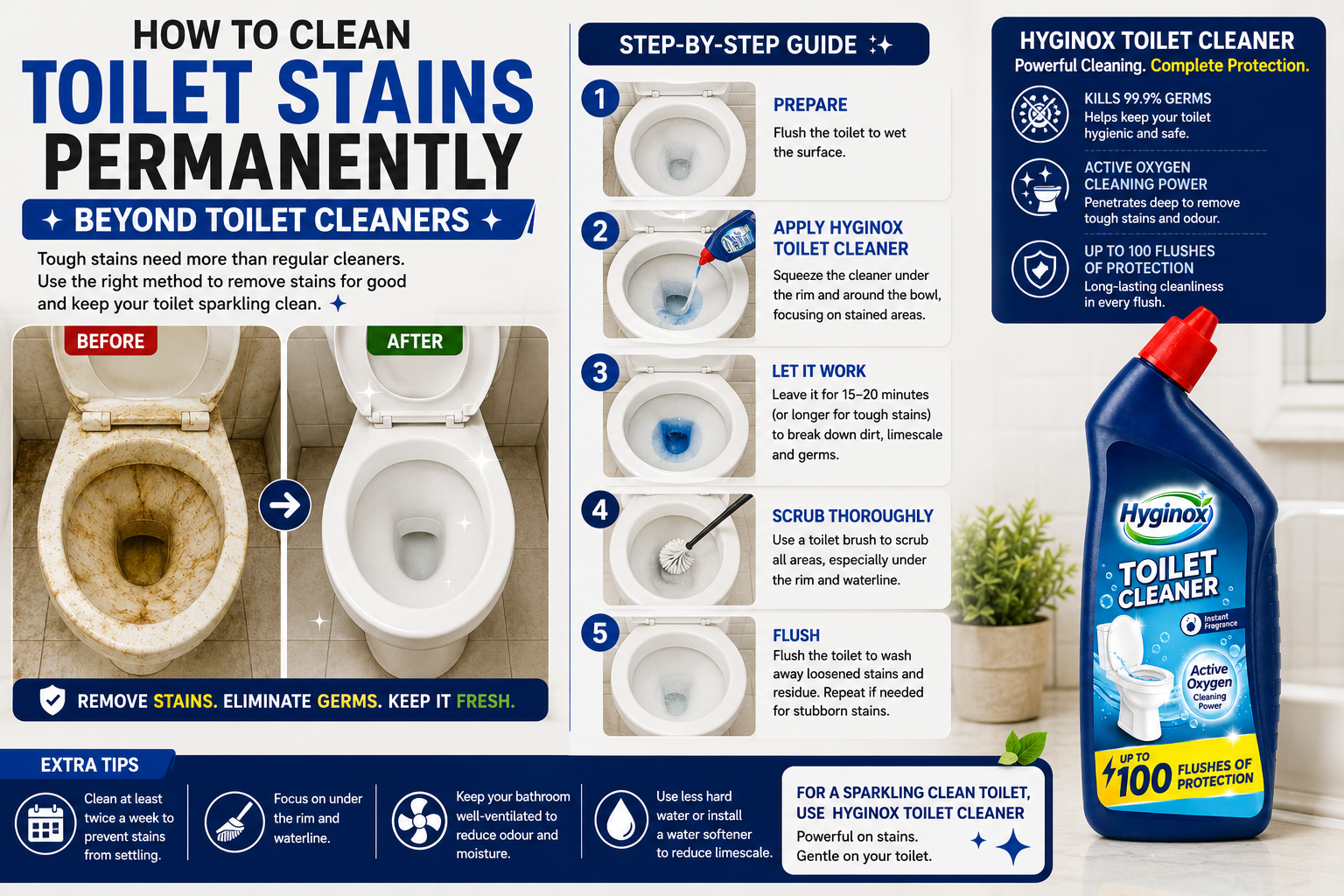
Toilet stains are an everyday nuisance for many households. Some stains vanish with a quick scrub; others are stubborn, reappearing despite repeated cleaning. The difference is chemistry: mineral deposits, iron oxidation, biological growth and urine salts all behave differently and therefore need tailored approaches. This comprehensive guide covers the main stain types — hard water rings, rust, brown/black mold and urine scale — and shows safe, practical, and long-lasting removal methods. You’ll also find prevention strategies and troubleshooting tips so stains don’t come back.
Why stains persist
Porcelain surfaces are glazed, but over time tiny scratches and pits develop. Minerals and organic films bond into these micro-roughnesses, and corrosion particles (iron) can embed under the glaze. Additionally, biofilms produced by bacteria and fungi create a slimy matrix that shields microbes from short disinfecting exposures. Understanding the cause helps pick the right treatment: acids dissolve minerals, chelators remove iron, enzymes break organic film, and mechanical action removes embedded crust.
Types of toilet stains — identification and causes
1. Hard water ring (mineral scale)
Cause: Dissolved calcium and magnesium precipitate evaporates, leaving calcium carbonate and magnesium salts on the bowl. These form a chalky, pale ring at the waterline and in places where water splashes and then dries.
2. Rust stains (iron-based)
Cause: Iron in water or corroding metal parts oxidize and deposit iron oxides on the bowl. Rust appears to dark brown streaks or spots, often localized near bolts, the rim, or where flow concentrates.
3. Brown / black buildup (mold, mildew, organic deposits)
Cause: Fungal spores and bacteria colonize damp areas, feeding on organic residues (soap scum, body oils). These can appear or black patches, often under the rim and in tiny crevices that remain wet.
4. Urine stains and scale
Cause: Uric acid and ammonium salts from urine can crystallize and form a yellowish or pale crystalline layer under the rim and inside the trap. Enzyme-based cleaners are useful because they break down organic compounds that bind the salts.
Bleach-based vs non-toxic methods — when to use which
Bleach (sodium hypochlorite) is a potent disinfectant and oxidizer. It kills microbes quickly and bleaches stains caused by pigments, but it does not dissolve mineral scale or iron oxides. Frequent bleach use can corrode metals and damage seals over time, and it produces irritating fumes. Non-toxic acidic methods (white vinegar, citric acid) dissolve mineral deposits more effectively and are safer for regular use, though they require longer contact time. Oxalic and sulfamic acids (found in some commercial rust and scale removers) are stronger and more targeted but require handling precautions.
Safer alternatives to pumice stone
Pumice is abrasive and when used correctly can remove tough deposits, but it can also abrade the porcelain glaze if used aggressively or on already-damaged finishes. Safer options include:
- Nylon or plastic scouring pads rated safe for porcelain.
- Soft pumice products specifically marketed for toilet bowls (follow instructions).
- Combining a chemical soak to loosen deposits, then gentle mechanical action to remove them.
Detailed step-by-step removal methods
A. Hard water ring — overnight acid soak (best for mineral scale)
This method uses acid to dissolve calcium carbonate while keeping abrasives minimal.
- Flush the toilet to lower the water level so the ring is exposed; consider removing excess water with a small cup or sponge if needed.
- Pour 2–3 cups of white vinegar directly onto the ring. For stronger action, dissolve 2–3 tablespoons of food-grade citric acid in 500 ml of hot water and pour it onto the area.
- Optionally add 1/2 cup baking soda after the vinegar to create a gentle fizzing action — this helps lift loose deposits.
- Cover or close the bathroom door and let the solution soak 8–12 hours (overnight). Citric acid is faster and often more effective than straight vinegar.
- After soaking, scrub with a stiff toilet brush or a nylon scouring pad. For stubborn edge deposits, repeat the soak or apply a paste of citric acid directly and let sit 1–2 hours before scrubbing.
B. Rust stains — chelation or targeted acid
Rust requires either chelation (binding the iron) or acids that can reduce and loosen iron oxides.
- For light rust, apply lemon juice or a citric acid paste directly to the stain and let it sit 30–60 minutes. Scrub gently and rinse.
- For heavier rust, use a product containing oxalic acid or sulfamic acid following the manufacturer’s instructions. These are formulated to dissolve iron oxide without harsh abrasives.
- If rust originates from hardware (bolts, flanges), inspect and replace corroded parts — otherwise the stain will recur.
C. Brown/black buildup (mold and biofilm) — disinfect + remove
- Wear gloves and ventilate the bathroom. Use either a diluted bleach solution (1 part bleach to 10 parts water) or 3% hydrogen peroxide safer alternative for sensitive noses.
- Spray or apply the disinfectant to the areas under the rim, in crevices, and any black patches. Let it sit 10–20 minutes to kill spores and loosen the film.
- Scrub with a bottle brush, trim brush, or small toothbrush for crevices. Enzyme cleaners are excellent at removing the remaining organic matrix after disinfecting.
- Rinse thoroughly and flush. If the black film returns quickly, consider checking for persistent moisture sources (leaks, poor ventilation) that sustain mold growth.
D. Urine scale — enzyme treatment and mechanical removal
- Use a bio-enzymatic cleaner designed for urine and organic residue. These products contain enzymes that digest urea and uric acid, breaking the bonds that hold scale in place.
- Apply per label, let soak overnight, then scrub and flush. Repeat weekly for several weeks if the deposit is old.
- For crystalline deposits under the rim, a citric acid soak followed by enzyme maintenance often yields the best results.
Combined approach for very stubborn stains
Often the toughest problems are mixed: mineral scale with embedded iron and biofilm on top. The recommended sequence:
- Start with an acid soak (vinegar/citric) to reduce mineral scale.
- Follow with a targeted rust remover if iron colors persist.
- Finish with an enzymatic cleaner and scrub to remove remaining organic film and odors.
Safety notes and mixing warnings
- Never mix bleach with vinegar, citric acid, or ammonia — dangerous chlorine or chloramine gases will form.
- Wear gloves and eye protection when handling concentrated acids or commercial removers; ventilate well.
- Test any abrasive pad or stone on a hidden area before applying broadly to avoid visible scratches.
Prevention: keep stains from returning
Permanent results rely on preventing the conditions that create stains:
- Daily: Quick swish with a toilet brush to remove fresh deposits and film.
- Weekly: Do a vinegar or citric acid soak in hard-water areas — 30 minutes to overnight depending on buildup.
- Monthly: Use an enzyme cleaner to keep biofilm and urine residues from forming deep bonds.
- Long-term: Consider a water softener or a point-of-entry filter if you have very hard water; replace corroded flush parts to stop iron introductions.
Troubleshooting common stubborn cases
Stain returns within days
Likely causes: continuing source of metal (corroded parts), very hard water, or insufficient mechanical removal. Inspect hardware and consider more frequent maintenance or a water treatment.
Stain won’t budge after multiple soaks
Consider that the glaze may be pitted or stained beneath the top layer. In some cases porcelain can become permanently discolored; a professional may recommend replacing the bowl or re-glazing.
Scratches after using pumice
If the surface looks dull or shows visible scratches after abrasive use, stop and switch to chemical soaks and gentler pads. Scratched glaze makes the bowl more likely to retain future stains.
Practical recipes and product guidance
DIY citric descaler
Mix 3 tablespoons food-grade citric acid in 500 ml hot water. Pour onto the ring or deposit, allow to sit 30–120 minutes, then scrub and flush.
Vinegar soak
Use undiluted white distilled vinegar for overnight soaks. For faster action, warm the vinegar (do not boil) before application.
Enzyme cleaner usage
Enzyme cleaners (bio-enzymatic) require longer dwell times to digest organic material — overnight applications are common. Use weekly for maintenance in problem households.
FAQ
Q: Is bleach the best option for toilet stains?
A: Bleach is excellent for disinfection and whitening but poor at removing mineral scale or iron. Use bleach for mold and mildew (carefully), and acids or enzymatic cleaners for scale and organic deposits respectively.
Q: Can I use a wire brush or metal tools?
A: No — metal tools can scratch porcelain and make future staining worse. Use plastic scrapers or nylon tools instead.
Q: How often should I perform maintenance?
A: Daily quick brushes, weekly vinegar/citric soaks in hard water areas, and monthly enzyme treatments generally prevent most problems.
Conclusion
Permanently removing toilet stains requires matching the treatment to the stain chemistry and committing to preventive care. For most homes, an occasional acid soak, targeted rust treatment if needed, enzyme maintenance for organic residues, and simple daily brushing will keep toilets clean without aggressive, frequent bleach use. Replace corroded hardware and consider water treatment in very hard-water areas to reduce recurrence.
Quick reference chart
- Hard water: Vinegar/citric soak → nylon scrub
- Rust: Oxalic/sulfamic-based remover → targeted scrubbing
- Mold/black: Bleach or hydrogen peroxide → scrub
- Urine scale: Enzyme cleaner → soak and scrub
SEO note
Primary keyword: toilet stains removal permanent — ensure it appears in the title, first paragraph, and conclusion. Use subheadings for long-form readability and include how-to steps for practical search intent.