Vinegar for Cleaning Bathroom Tiles: Does It Actually Work?
Why vinegar is popular
White vinegar is cheap, widely available, and mildly acidic (acetic acid). That acidity helps dissolve and loosen some types of deposits—especially mineral spots and light soap scum—so many people reach for vinegar quick, natural cleaning trick.
What stains vinegar CAN remove
- Fresh mineral marks and water spots: Light limescale and spotty mineral residue respond well to a diluted vinegar solution on glazed tiles.
- Soap scum and light film: Vinegar helps cut through thin soap scum mixed with hard-water residue on smooth, non-porous tiles.
- Surface grime on glazed finishes: When the tile surface is sealed and non-porous, vinegar can help lift superficial grime.
What stains vinegar CAN'T remove
- Heavy mineral crust and thick limescale: Hardened deposits usually need descalers or stronger commercial products with longer dwell time.
- Stains inside grout or textured tiles: Vinegar’s liquid action may not penetrate textured grooves or deeply stained grout.
- Organic or dye stains: Rust, dye marks, and some organic stains often require targeted products or stain removers.
- Natural stone etching: Vinegar will damage marble, limestone, travertine, and other acid-sensitive stone surfaces.
Better alternatives
For tougher problems, consider:
- Commercial descalers — formulated to dissolve mineral bonds safely on glazed tiles and many ceramics.
- Tile-safe bathroom cleaners — combined surfactants and mild acids/descalers that work faster and require less scrubbing.
- pH-neutral stone cleaners — required for marble and other natural stone to avoid etching.
- Mechanical aids — soft-bristle brushes, microfibre pads, or steam cleaners to loosen residue without harsh chemicals.
When to use vinegar vs commercial cleaners
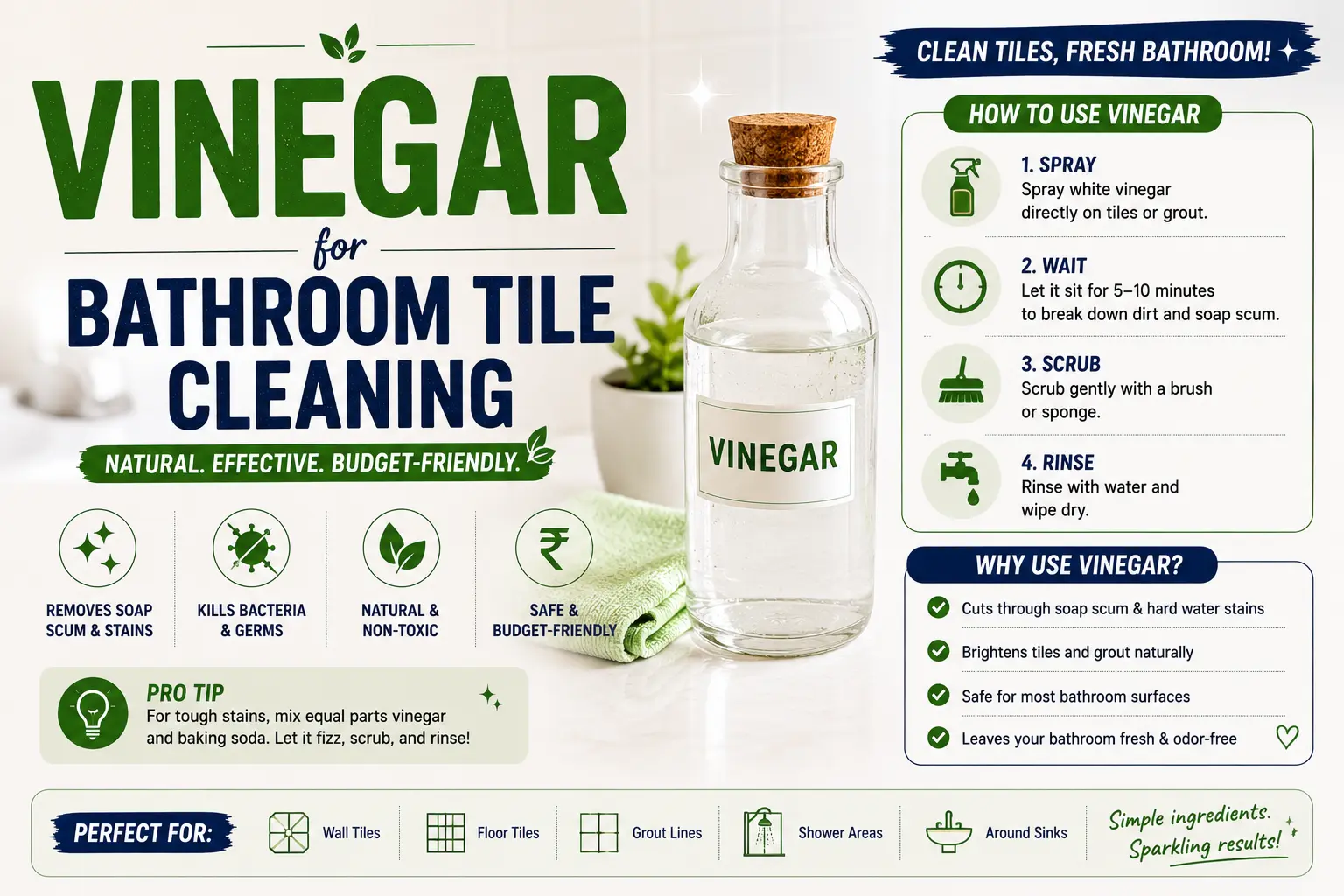
Use vinegar when stains are fresh, light, and the surface is non-porous glazed tile. Mix one part white vinegar with one part water, apply, let sit 5–10 minutes, then rinse thoroughly. Switch to a commercial cleaner when:
- Stains are thick or old and do not respond to vinegar.
- Tiles are heavily textured or grout is deeply stained.
- You need faster results over a larger area.
Product recommendations (Hyginox)
For reliable, repeatable results across common Indian bathroom tiles, we recommend Hyginox Bathroom Cleaner for day-to-day and weekly maintenance. It combines surfactants with safe descaling action to lift soap scum, water marks, and light mineral residue without risky DIY chemistry.
For heavy mineral crust, use a Hyginox descaling formulation or a manufacturer-recommended descaler suitable for your tile type. For natural stone, choose Hyginox stone-safe products or a pH-neutral cleaner marked safe for marble.
FAQ: Common questions about vinegar cleaning
Is vinegar safe on grout?
On ceramic and vitrified tiles, diluted vinegar can help with grout surface marks, but it may dry out or weaken some grout types if overused. For regular maintenance, use a grout-safe cleaner and reseal grout periodically.
Can I mix vinegar with baking soda?
Mixing vinegar and baking soda causes a fizzing reaction that briefly agitated residue; however, the chemical effect neutralizes much of the acidity, so the combination is not a substitute for a proper descaler on heavy mineral deposits.
How long should I leave vinegar on tiles?
Keep a vinegar solution on light stains for 5–10 minutes, then scrub gently and rinse. Avoid long dwell time on any untested or unknown surface to reduce risk of damage.
Will vinegar damage metal fixtures?
Vinegar can corrode some metal finishes over time. Rinse and dry metal fittings after vinegar contact; avoid prolonged exposure to prevent dulling or corrosion.
What’s the safest approach for unknown tile types?
Test any cleaner on a small, hidden area first. When in doubt, use a pH-neutral, tile-safe commercial cleaner or consult product guidance for your tile and grout type.
Quick how-to (summary)
- Rinse the area to remove loose dirt.
- Apply diluted vinegar (1:1) on glazed tiles for light stains.
- Wait 5–10 minutes, scrub gently, then rinse well.
- For heavier deposits, use a tile descaler or Hyginox descaler and follow label directions.
- Dry surfaces to prevent new mineral marks.
Final takeaway: Vinegar is a useful, low-cost option for light, fresh stains on glazed tiles, but it’s not a cure-all. For stubborn mineral buildup, textured tiles, or sensitive stone, choose tile-safe commercial cleaners or Hyginox products for safer, faster results.