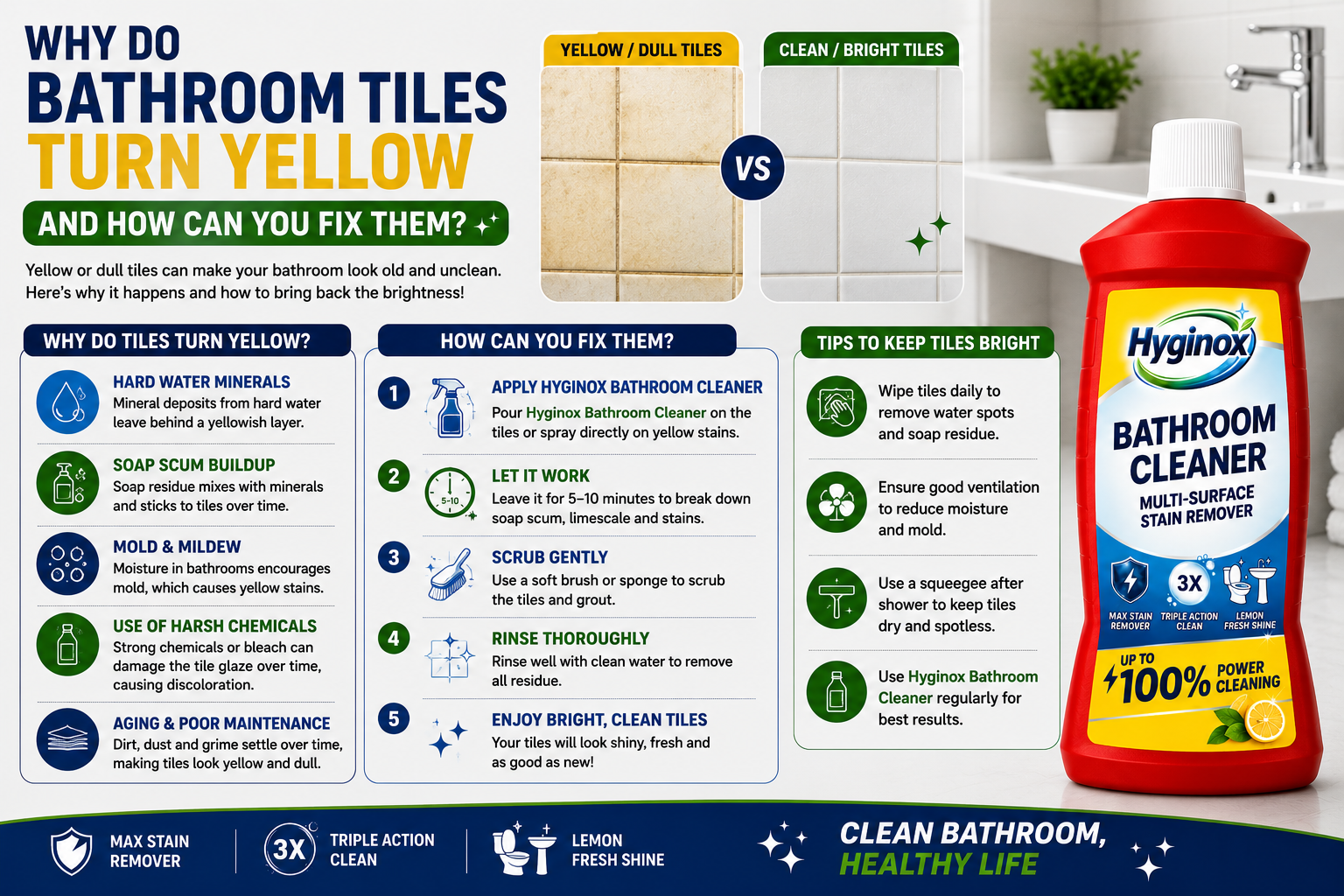
Why Do Bathroom Tiles Turn Yellow and How Can You Fix Them?
Introduction
Bathroom tiles that start looking yellow rarely do so for just one reason. In many Indian homes, the color change is a mix of soap scum, hard water residue, moisture, mildew, and older cleaning habits that leave a film behind. The problem usually begins subtly: a slight cream-colored cast near the shower, a yellow edge around the basin wall, or dull patches in corners that do not look dirty enough to worry about at first.
The good news is that yellowing is often fixable if you identify the cause before you start scrubbing. Some yellow marks are film-like and come off with a bathroom cleaner. Others are mineral deposits that need a descaler. A few stains are tied to grout, mildew, or old sealants and need a more targeted approach. Treating every yellow mark the same way usually wastes time and can damage the tile surface.
Quick Answer
Bathroom tiles turn yellow because soap residue, hard water minerals, mildew, and aging coatings build up on the surface over time. The fix depends on the cause. Use a bathroom cleaner for soap scum, a descaler for mineral buildup on compatible tiles, and a grout-safe cleaner for stained joints. Avoid vinegar or acidic cleaners on marble, limestone, travertine, and other acid-sensitive stone.
Key Takeaways
- Yellow tile stains are usually caused by buildup, not permanent tile damage.
- Soap scum often creates a dull yellow film on glazed tiles and shower walls.
- Hard water can leave yellow-white mineral residue, especially near taps and splash zones.
- Mildew and moisture can create yellow-brown patches in damp corners and grout.
- Older sealants, caulk, and cleaning residue can also discolor tile areas.
- The right cleaner depends on whether the stain is greasy, mineral-based, or organic.
- Prevention through drying and ventilation is easier than repeated scrubbing.
Table of Contents
- What causes bathroom tiles to turn yellow?
- How to tell the difference between yellow stains
- How to fix yellow bathroom tiles safely
- Comparison table: causes vs best fixes
- What not to do on yellow tiles
- Prevention tips for Indian bathrooms
- FAQ section
- Conclusion and Hyginox recommendation
What causes bathroom tiles to turn yellow?
Direct Answer: Bathroom tiles turn yellow when film, minerals, moisture, or aging materials build up on the surface. The most common causes are soap scum, hard water residue, mildew, and old sealants or caulk that have discolored over time. In humid, frequently used bathrooms, these causes often appear together.
In Indian households, the problem is often more visible because bathrooms get repeated use, water can be mineral-rich, and ventilation may be limited. A tile that looks pale yellow near the shower and darker around the grout is usually showing a combination of moisture exposure and residue buildup rather than one single stain.
1. Soap scum and body oils
Soap scum forms when soap mixes with minerals in water and the oils from skin and hair. It leaves a cloudy film that can shift from white to cream or yellow over time, especially if it sits in layers. This is one of the most common reasons shower walls and tub tiles look yellowish even when they were once bright.
2. Hard water minerals
Hard water leaves calcium and magnesium deposits when water dries on the tile. Fresh deposits can look white or cloudy, but older mineral residue can take on a yellowed or dingy look, especially when mixed with soap residue. The problem is most obvious around taps, shower walls, and the lower edges of tiled areas where water splashes repeatedly.
3. Mildew and moisture staining
Yellow-brown patches near corners, grout lines, or silicone joints can be caused by mildew growth. Bathrooms with poor ventilation or slow drying times are most at risk. Even if the mildew is light, it can make tiles look discolored and dull. In these cases, the issue is not just on the surface of the tile but in the damp area that supports repeated regrowth.
4. Old caulk or sealant
Silicone caulk and sealants can yellow age, especially in high-moisture areas. Sometimes the tile itself is fine, but the surrounding sealant makes the whole area look stained. This is often seen around bathtubs, shower edges, and corners where water sits longer.
5. Cleaning residue or product buildup
Some cleaning products leave behind residue if they are not rinsed properly. Over time, that residue attracts more dust and moisture, making tiles look dull or yellowed. Using too much cleaner can be almost the wrong one, because the leftover film acts like another layer on the tile.
How to tell the difference between yellow stains
Direct Answer: The easiest way to identify the stain is by look, feel, and location. Soap scum feels slightly greasy or waxy and appears film. Hard water residue feels dry and chalky. Mildew often shows up in damp corners or grout lines-brown spots, while old sealant discoloration usually follows the edges or joints.
| Stain type | Appearance | Feel | Common location |
|---|---|---|---|
| Soap scum | Dull yellow, cloudy, film-like | Slightly greasy or waxy | Shower walls, tub sides, splash zones |
| Hard water residue | White, cream, or yellowed mineral film | Dry, chalky, rough | Tap surrounds, glass edges, lower walls |
| Mildew | Yellow-brown spots or patches | Usually damp or soft when active | Corners, grout, silicone joints |
| Old sealant or caulk | Yellowing along edges or seams | Rubbery or deteriorated | Bathtub rims, shower seams, corners |
If the tile looks yellow everywhere, use the location and texture to narrow the cause. If it is yellow only where water and soap land repeatedly, soap scum is likely. If it is concentrated around taps or shower spray zones, hard water is likely part of the issue. If the yellowing hugs the grout or sealant line, moisture and mildew are more likely.
How to fix yellow bathroom tiles safely
Direct Answer: Fix yellow tiles by matching the cleaning method to the cause. Use a bathroom cleaner or degreasing formula for soap scum, a tile-safe descaler for hard water on compatible surfaces, and a grout-safe or mildew-targeted cleaner for joint discoloration. Always test a hidden area before treating a large patch.
Step 1: Identify the tile material
Before using any cleaner, check whether the tile is glazed ceramic, vitrified, porcelain, or natural stone. This matters because some surfaces can handle mild acids while others cannot. Marble, limestone, and travertine are especially sensitive and should never be cleaned with vinegar or harsh descalers.
Step 2: Remove loose surface dirt first
Rinse the area lightly or wipe it with a damp microfiber cloth before applying any product. This removes loose dust and helps the cleaner work on the stain itself rather than spreading grime around. A clean starting point also makes it easier to see how much yellowing is actually left.
Step 3: Use the correct cleaner for the stain
For soap scum, use a bathroom cleaner that cuts through film and residue. For mineral stains on compatible tile, use a tile-safe descaler or a mild acidic cleaner. For mildew around grout or corners, use a cleaner that targets organic growth and rinse thoroughly after use.
Step 4: Let the cleaner dwell briefly
Most cleaners need a short dwell time to soften buildup. That means you apply the product and give it a few minutes to work before scrubbing. Short dwell time helps the chemical break the bond between the stain and the tile, which reduces the amount of force you need.
Step 5: Scrub gently with the right tool
Use a soft sponge, microfiber pad, or soft-bristle brush. Avoid steel wool and abrasive scrubbing pads unless the product and surface specifically allow them. The goal is to lift the stain without scratching the tile face or wearing down the grout edge.
Step 6: Rinse and dry thoroughly
Once the stain loosens, rinse the surface with clean water and dry it completely. Leftover cleaner or moisture can make the tile look dull again. Drying also helps you see whether the yellowing has actually been removed or whether a second treatment is needed.
Comparison table: causes vs best fixes
Direct Answer: The best fix depends on what created the yellow color in the first place. Soap scum needs a degreasing cleaner, minerals need a descaler, mildew needs moisture control plus a targeted cleaner, and yellowed sealant often needs replacement rather than scrubbing.
| Cause | Best fix | What to avoid |
|---|---|---|
| Soap scum | Bathroom cleaner or degreasing formula | Scrubbing too hard with abrasive pads |
| Hard water residue | Tile-safe descaler on compatible surfaces | Using acid on marble or stone |
| Mildew | Targeted mildew cleaning and drying | Leaving corners damp |
| Old sealant or caulk | Replace the yellowed material | Trying to bleach deteriorated sealant forever |
| Product residue | Rinse and re-wipe with clean water | Layering more cleaner on top |
What not to do on yellow tiles
Direct Answer: Do not use the strongest chemical available, and do not assume all yellow stains are the same. Harsh acids, steel wool, and random product mixing can damage tiles or make the discoloration worse.
- Do not use vinegar on marble, limestone, travertine, or other acid-sensitive stone.
- Do not mix bleach with vinegar or other cleaners.
- Do not scrub glossy tiles with steel wool or harsh scouring pads.
- Do not leave cleaner residue behind after wiping.
- Do not keep cleaning the same area without identifying the stain type first.
Many bathroom tile problems become bigger because homeowners attack the stain instead of the cause. If the yellowing keeps returning, the room may need more ventilation, better drying habits, or a change in cleaning routine rather than just another scrub.
Prevention tips for Indian bathrooms
Direct Answer: The best way to stop yellowing is to reduce how long moisture, soap, and minerals stay on the tile. A few small habits after each bath can prevent the discoloration from forming in the first place.
Daily prevention habits
- Use a squeegee on shower walls and glass after bathing.
- Wipe taps and tile splash zones with a microfiber cloth.
- Leave the exhaust fan on long enough to reduce humidity.
- Keep soap trays and bottle bases from staying wet.
- Rinse areas that get regular shampoo or soap splash.
Weekly prevention habits
- Do a light bathroom clean before buildup hardens.
- Check grout and corner areas for early discoloration.
- Spot clean the lower half of shower walls and tap surrounds.
- Remove any residue from cleaning products after the weekly wash.
Monthly prevention habits
- Descale taps, shower heads, and glass edges if your water is hard.
- Inspect caulk and grout for yellowing or mildew.
- Re-seal grout if your tile system uses sealant and the surface needs it.
- Clean hidden corners where moisture often lingers.
People Also Ask
Are yellow bathroom tiles permanently stained?
Not usually. Most yellowing is caused by soap scum, hard water residue, mildew, or old sealants and can be improved with the right cleaning method.
Can I use vinegar on yellow bathroom tiles?
Vinegar can help with light mineral residue on glazed tile, but it should not be used on marble, limestone, or other acid-sensitive stone surfaces.
Why do tiles turn yellow near the shower?
Shower areas collect more soap scum, moisture, and mineral residue than other parts of the bathroom, so yellowing often starts there first.
How do I remove yellow stains from grout?
Use a grout-safe cleaner and a soft brush. If the stain is caused by mildew or moisture, improve ventilation and dry the area thoroughly after cleaning.
What cleaner is best for yellow bathroom tiles?
The best cleaner depends on the cause. Bathroom cleaners work well on soap scum, while descalers are better for hard water residue on compatible tile surfaces.
Can old caulk make tiles look yellow?
Yes. Yellowed caulk or sealant can discolor the surrounding area visually, even if the tile itself is not badly stained.
When professional help may be needed
Direct Answer: Professional help may be needed when the yellowing does not improve after safe cleaning, when grout or caulk is heavily discolored, or when the bathroom uses delicate stone that should not be treated aggressively. In those cases, restoration or replacement may be more effective than repeated scrubbing.
If the tile has been yellowed for a long time, the surface may need professional descaling, deep grout cleaning, or sealant replacement. This is especially useful in bathrooms with hard water and poor ventilation where the same stains keep returning.
Hyginox recommendation
For most bathrooms, a dedicated bathroom cleaner is the most practical first step because it handles soap scum and everyday residue before they turn into yellow buildup. Hyginox Bathroom Cleaner fits routine care well, especially when used with regular drying and ventilation habits.
Conclusion
Bathroom tiles usually turn yellow because of buildup, not because the tile itself has failed. Soap scum, hard water minerals, mildew, old sealants, and product residue are the main causes. Once you know which one you are dealing with, the right fix becomes much easier to choose.
The safest approach is simple: identify the stain, match the cleaner to the cause, rinse well, and dry the surface. With a little routine maintenance, yellowing can usually be reduced or prevented before it becomes a bigger cleaning project.
CTA
If your bathroom tiles are starting to look yellow, start with a cleaner suited to the stain type and the tile surface. For regular maintenance, use a purpose-built bathroom formula that helps prevent soap film and residue from building up again.