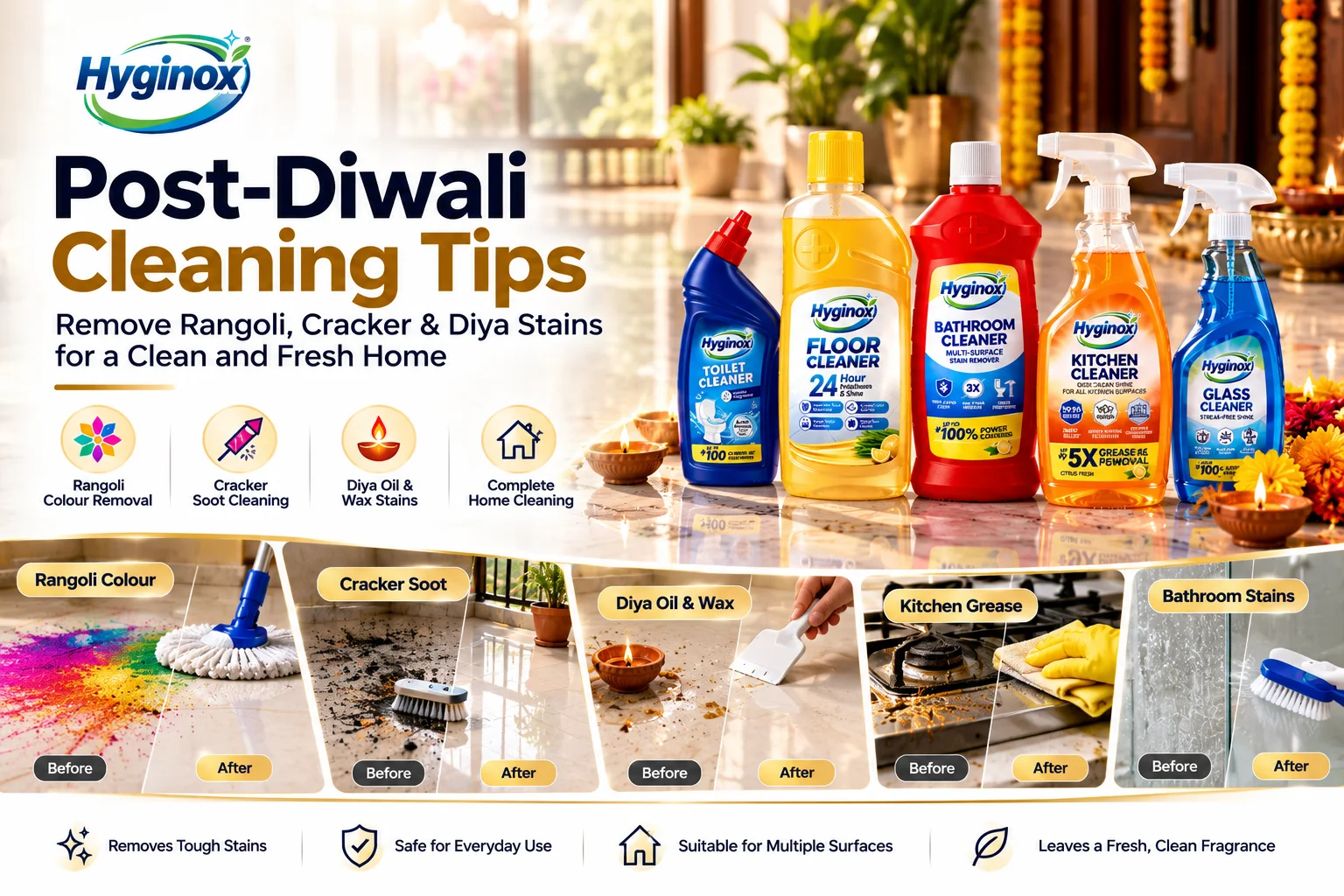
These post Diwali cleaning tips show you what to clean first and how to remove rangoli colour, cracker soot, diya oil and wax from floors, balcony, kitchen, bathrooms and glass. Diwali leaves a lot behind: rangoli powder in the corners, soot on the balcony, oil rings from diyas, a greasy kitchen and bathrooms that have seen a week of guests. Cleanup feels like a second festival chore, but it gets much easier when you follow a fixed order and treat stains early. Every method here is safe for common surfaces in a typical Indian home.
Post Diwali cleaning tips: dry work before wet work
The most common mistake is reaching for a bucket of water first. Wet rangoli powder spreads into tile texture and grout, and wet soot smears into grey streaks that take longer to remove. Start dry, then move on to wet cleaning.
- Collect flowers, leaves, diya leftovers and cracker waste in a bag.
- Sweep or vacuum every floor, including corners, door tracks and the space under furniture.
- Wipe dusty surfaces with a dry or barely damp microfibre cloth, from top to bottom.
- Only then start on stains, floors and bathrooms.
Work from the balcony or entrance inward, so you do not carry soot back onto floors you have already cleaned. Wear gloves and keep windows open while you use cleaners.
How to remove rangoli colour from floors
Rangoli is the first thing most post Diwali cleaning tips tackle, so it helps to know what you are dealing with. Rangoli powders are fine pigments, often mixed with chalk or marble dust. On glazed tiles they stay on the surface, but on textured, unglazed or porous floors they settle into the pores and are harder to lift.
- Sweep off the loose powder. Do not mop yet.
- Vacuum the grout lines and textured areas.
- Wipe with a damp cloth and rinse it often, so you do not smear colour across the floor.
- Mop with floor cleaner diluted as per the label. Hyginox Floor Cleaner is a multi-surface formula for tile, marble, granite and vitrified floors.
- Let the floor air-dry or go over it with a dry mop.
If colour stays in the grout, use a soft brush and a mild cleaner instead of scrubbing hard. Our guide to cleaning grout without damaging tiles covers safe tools and mistakes to avoid.
Marble and granite: avoid vinegar, lemon and other acids, which can dull natural stone. Use a pH-neutral cleaner and read how to clean granite and marble floors safely or clean marble floors without damage.
How to remove cracker stains and soot from balcony and terrace floors
Burnt cracker residue and pigment from flower pots and chakris often leave dark patches on balcony and terrace floors. The longer they stay, the harder they are to lift, so deal with them within the first few days. Of all the post Diwali cleaning tips here, this is the most time-sensitive one.
- Let the area cool, then sweep up paper, ash and loose residue. Use a dry brush on soot.
- Wet the surface lightly with water.
- Apply a diluted floor cleaner or a mild detergent solution and leave it for a few minutes.
- Scrub with a stiff nylon brush. Avoid wire brushes, which scratch tiles and polished surfaces.
- Rinse with plenty of water, push the dirty water toward the drain and repeat on stubborn marks.
Do not use strong acids on stone or polished tiles. Also clear ash from the drain cover, so it does not block the outlet the next time you wash the balcony.
How to remove diya oil and wax stains
Diya wax
Let the wax harden fully. Lift it with a plastic scraper or an old card, never a metal blade, which can scratch tile. Wipe the leftover film with warm soapy water or a mild degreaser.
Diya oil
Blot fresh oil with a cloth or tissue without rubbing it in. Sprinkle baking soda or another dry absorbent on the spot, leave it for 15 to 20 minutes, then sweep it up. Wash the area with diluted floor cleaner and rinse. Oil can soak into unsealed or porous stone, so act quickly and test any cleaner in a hidden corner first.
Cleaning the kitchen after festive cooking
Frying, sweets and extra guests mean grease collects on the slab, stove, wall tiles and chimney. Among post Diwali cleaning tips, the kitchen is the one most often put off, because grease hardens as it cools. Spray Hyginox Kitchen Cleaner on the greasy surface, allow 30 to 60 seconds for degreasing as directed on the label, then wipe with a clean damp cloth.
- Clean the chimney filter after heavy frying. See our guides on cleaning kitchen chimney filters at home and the Hindi guide चिमनी के फिल्टर कैसे साफ करें.
- Wipe cabinet fronts and handles, which pick up oil from busy cooking days.
- For old, sticky grease, use our kitchen grease stain guide.
Cleaning bathrooms and toilets after guests
A week of guests means more soap scum, water marks and toilet use. For tiles, sinks and taps, spray Hyginox Bathroom Cleaner on the stained surface, wait 3 to 5 minutes and wipe. For toilets, apply Hyginox Toilet Cleaner under the rim, leave it for 10 minutes, brush around the bowl and waterline, then flush.
Hyginox products use Active Oxygen technology, an oxygen-releasing action that helps loosen dirt and stains so wiping takes less scrubbing. Never mix cleaners, and never combine a bleach product with an acid-based cleaner. For chalky white marks on tiles, read how to remove hard water stains from bathroom tiles.
Cleaning windows, glass and mirrors after smoke and dust
Smoke and fine dust leave a film on windows, balcony doors and mirrors. Dry-wipe the dust first, then spray Hyginox Glass Cleaner evenly and wipe with a dry lint-free cloth. Work from top to bottom and avoid cleaning glass in direct sun, which dries the cleaner too fast and leaves streaks.
Post Diwali cleaning tips by floor type
The same stain needs a different approach depending on what is underfoot. Match the method to your floor before you start.
- Vitrified and glazed ceramic tiles: sweep first, then mop with diluted floor cleaner and a clean microfibre mop. Colour and soot sit on the surface, so they lift without hard scrubbing.
- Marble and granite: use a pH-neutral cleaner, avoid acids, and wipe dry so water marks do not form. Test a hidden corner first.
- Anti-skid and textured balcony tiles: work a stiff nylon brush along the grooves, where soot and pigment collect, then rinse thoroughly.
- Grout lines: use a soft brush and a mild cleaner, and avoid wire brushes that wear the grout away.
A two-day plan to put these post Diwali cleaning tips to work
| When | What to clean |
|---|---|
| Day 1 morning | Bag dry waste, sweep and vacuum all floors, dry-brush balcony soot |
| Day 1 afternoon | Rangoli floors, cracker marks on balcony and terrace, diya wax and oil |
| Day 2 morning | Kitchen slab, stove, tiles and chimney filter |
| Day 2 afternoon | Bathrooms and toilets, then windows, glass and mirrors |
| Day 2 evening | Final mop of all floors, from the far rooms toward the entrance |
If the list feels like too much for one weekend, split it into short sessions with breaks in between. Breathing Space makes a similar point about pacing in its guide to Diwali cleaning without the burnout, which suggests working in 10-minute blocks and sorting before you organise.
Common post-Diwali cleaning mistakes
- Mopping before sweeping, which turns rangoli powder and soot into paste.
- Scrubbing rangoli with a wet cloth and spreading colour into grout.
- Using vinegar, lemon or other acids on marble, granite or limestone.
- Mixing cleaners, especially bleach with acid-based products.
- Using wire brushes or metal scrapers on tiles and polished floors.
- Leaving cracker marks on the balcony for weeks until they set.
- Skipping a patch test on a hidden corner before using a new cleaner.
Final takeaway
These post Diwali cleaning tips come down to one order: dry waste first, then rangoli and cracker marks, then oil and wax, then the kitchen, bathrooms and glass. Treat stains early, match the cleaner to the surface, and keep acids away from natural stone. A consistent routine afterwards means next year's Diwali cleanup starts from a cleaner base.